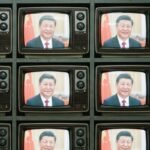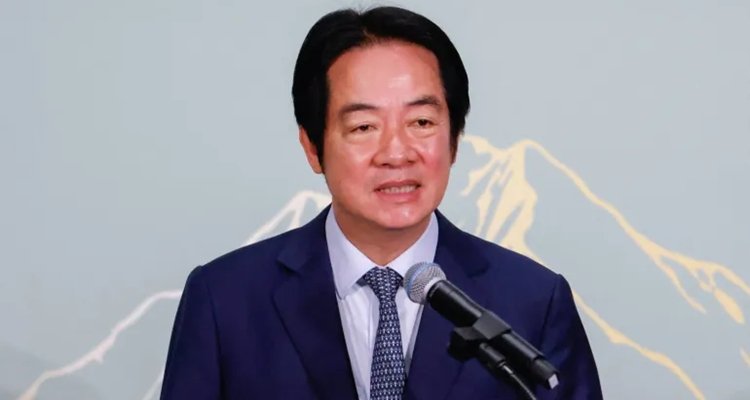
As patiently as he can, stressing what must already be painfully obvious to all interested observers, ROC President Lai Ching-te (shown above) has been reminding the United States and Donald Trump that the Republic of China is not the enemy, not the one causing trouble in the Taiwan Strait, and that it’s not a bad thing to not want to be ruled by the oppressive People’s Republic of China (Reuters, June 18, 2026).
Taiwan’s safeguarding its own security and refusing rule by China’s Communist Party should not be seen as a provocation, President Lai Ching-te said on Thursday, adding he hoped a new U.S. arms sale package can be approved soon….
Speaking to the Taiwan Foreign Correspondents’ Club in Taipei, Lai reiterated his desire for talks based on “parity and respect” with China, but said Taiwan had a right to protect its interests and that only the Taiwanese people can decide their future.
“Taiwan’s safeguarding of its own national security and maintaining its democratic and free way of life, its refusal to accept unification, and its refusal to accept rule by the Chinese Communist Party should not be seen as a provocation against China,” he added….
Taiwan has also been unnerved by comments last month from U.S. President Donald Trump after he met China’s Xi Jinping in Beijing that he was still considering whether to approve new arms sales for Taiwan, saying they were “a very good negotiating chip” with China.
Lai said the U.S. security commitment to Taiwan had not changed.
“The key is that Taiwan must not change course in strengthening its own defence capabilities, nor can it slow its pace,” he said.
“We will continue to maintain close communication with the U.S. government, and we also hope the arms purchases can be approved as soon as possible.”
On the one hand, Taiwan has been “unnerved” by President Trump’s foolhardy remarks about the still-impending arms deal. The Taiwanese also can’t be too happy about CCP-echoing statements like “I’m not looking to have someone go independent,” as if the Republic of China were not already independent.
On the other hand, Lai Ching-te is speaking as if all is well and on track with the United States. He assures his listeners (and himself) that the American commitment to Taiwan is unwavering—but for the unfortunate matter of the White House’s delay in completing an almost but not quite agreed to major arms sale to Taipei.
Something has changed in the relations between the two countries. Maybe it will change back.