Why, despite the Chinese Communist Party’s official atheism, is Beijing so determined to decide or pretend to decide who will be the next Dalai Lama? The bottom line, suggests Jianli Yang, is that in this case it’s more convenient to co-opt than to (more openly) destroy (Providence, August 3, 2026).
First, the Dalai Lama commands enormous respect and influence throughout the world, and openly abolishing the institution would provoke substantial international condemnation. Second, preserving the outward appearance of institutional independence enables Beijing to continue projecting an image of respect for religious traditions. More fundamentally, however, this approach reflects a subtler strategy of political control: not destruction through elimination, but domination through appropriation; not open rejection, but gradual hollowing out from within….
Over time, the institution may remain, but its meaning will have been emptied; the outward form will survive, while its soul has been removed. Such an “orchestrated continuity” may ultimately prove to be the most effective means of dismantling a tradition.
Religion tends to survive attempts, direct or indirect, to destroy it; “the vitality of religious faith often exceeds that of political power.” At the same time, though, “prolonged campaigns of suppression and transformation impose very real costs upon communities and individuals,” as the modern history of Tibet attests.
It’s likely that two Dalai Lamas will emerge, the CCP-imposed one and the one identified by Tibetan Buddhist monks. The monks who will have the job of finding the successor are doubtless thinking about how to save him from the fate of the boy that monks identified in 1995 as the reincarnation of the Panchen Lama, the Tibetan spiritual leader second in importance only to the Dalai Lama. The Chinese government kidnapped the child, and as far as anyone knows he and his family are still being detained somewhere. Meanwhile, a Party-installed Panchen Lama whom Tibetans regard as illegitimate makes the rounds.
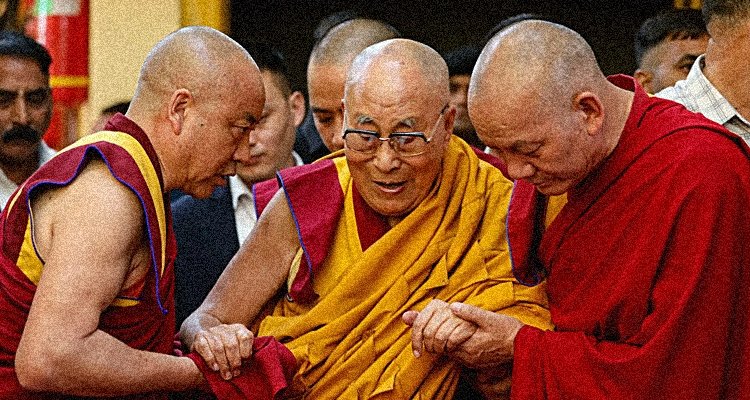
The beginning of the next big step of the CCP’s efforts to destroy Tibetan language and culture has been deferred thanks to the longevity of the current Dalai Lama, the fourteenth, Tenzin Gyatso, born Lhamo Thondup. He recently celebrated his 91st birthday.
Also see:
The New York Times: “How China Is Erasing Tibetan Culture, One Child at a Time”