Will the Chinese Communist Party’s new Ethnic Unity Law enable it to do even more to harass, brainwash, jail and murder dissidents and members of targeted groups within China? And to harass and kidnap Chinese and others currently living outside of China?
Those are open questions. But the new law is certainly a brazen confirmation that the party-state intends to keep on doing such things. The law’s purpose is at least as much to intimidate as to provide a “legal basis” for decades-old policies.
Using to target
As the Ethnic Unity Law was about to go into formal effect, the Australian press reported that Uyghur and Tibetan groups in Australia fear that it will be used “to target their communities, and they have urged the Albanese government to condemn the measures” (The Sydney Morning Herald, June 29, 2026).
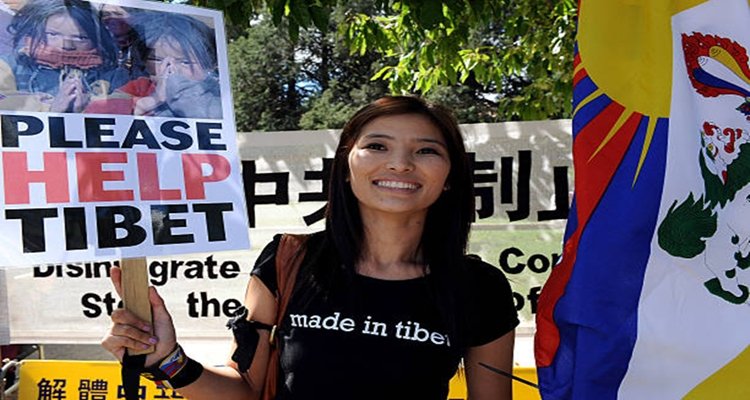
This includes the country’s Tibetan and Uyghur groups, whose diaspora communities have campaigned against what they, and human rights groups, say is Beijing’s assimilationist agenda and the systematic cultural erasure of their identity and practices.
“These laws could be weaponised against Tibetans living in exile in Australia and Dharamsala, India,” said Zoe Bedford, executive officer of the Australia Tibet Council, which will campaign against the laws at an event in Parliament House in Canberra on Monday.
“This is not simply another policy initiative. It represents a direct threat to Tibetan identity, culture and existence.”
The law, which was passed by China’s parliament in March, lays out an extensive framework for promoting a shared Chinese identity. It mandates Mandarin Chinese as the official language of instruction in schools, and when there is a need to use minority languages in official communications, Mandarin must take primacy.
It requires each ethnic group to have the “correct perspectives” on the nation, history, ethnicity, culture, and religion and for parents to “educate and guide children to love the Chinese Communist Party”….
Australian Uyghur Tangritagh Women’s Association president Ramila Chanisheff called on the Albanese government to more forcefully and publicly denounce the law and reassure communities of their rights to protest on Australian soil.
Australia’s Department of Foreign Affairs and Trade has issued a statement about the Ethnic Unity Law’s “potential to curtail the rights and freedoms of individuals beyond China’s borders.” And a spokesman for the department says that the Australian government has “raised our concerns on the ethnic unity law directly with China and at the UN Human Rights Council.”
The Albanese government and other governments could doubtless be more forceful in their opposition.
Last April, the European Parliament passed a resolution demanding that the Chinese government repeal the law, promising “severe consequences for EU-China relations.” The resolution, adopted by a 439 to 52 majority (with 71 abstentions), urged member states to suspend their extradition treaties with China—implying that such extradition treaties exist despite China’s long track record of going after innocent people in foreign lands.
The European Parliament’s resolution was only a sort of recommendation, not legally binding. And there’s been no news of “severe consequences” as a result of the PRC’s failure to repeal the law. This month, though, an EU spokesman said that the EU calls on “any third country to refrain from attempts to conduct transnational repression within the European Union or elsewhere.”
Before the Ethnic Unity Law
A few years ago, PIME Asia News reported that Beijing had arrested an opponent of CCP censorship who had fled to Laos. “Qiao Xinxin was detained in a cross-border operation by Beijing security forces. According to local sources, he was picked up by three Laotian and six Chinese police officers linked to the Communist Party. The dissident and former contributor to Radio Free Asia founded the Internet Firewall of China movement against net restrictions….
“In recent weeks, the dissident himself had accused the Chinese Communist Party leadership of using his family to threaten or blackmail him. And to force him to stop his pro-rights campaign and fight against ‘the wall’ by ordering him to cross the borders and return to the motherland from his exile in Thailand and Laos.”
Qiao’s current status, like that of so many others detained by the Chinese government, is unknown.