Guess when these words were written:
While some suggest that economic development will inexorably lead to improvements in human rights and the rule of law, in the past few years the rights situation has deteriorated. The rule of law continues to seriously lag behind economic expansion. The judiciary, a pillar of a rights-respecting society, remains poorly trained and under the political control of the Chinese Communist Party. Access to justice remains severely limited for citizens with grievances, particularly the poor. The Party retains its monopoly on political power and shows no signs of allowing political pluralism or challenges to its authority. Torture continues to be rampant, China continues to lead the world in the number of judicially authorized executions, and land grabs by the powerful from the poor have become a national problem. The list of critical human rights problems can go on and on. As a result, there is enormous social unrest, as evidenced by tens of thousands of street protests annually.
Since [dictator of China] came to power in [year], the trend towards greater freedom of expression—a core right upon which the attainment of many other rights depends—has been reversed.
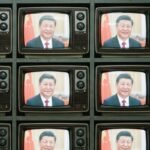
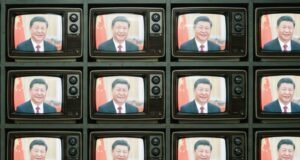
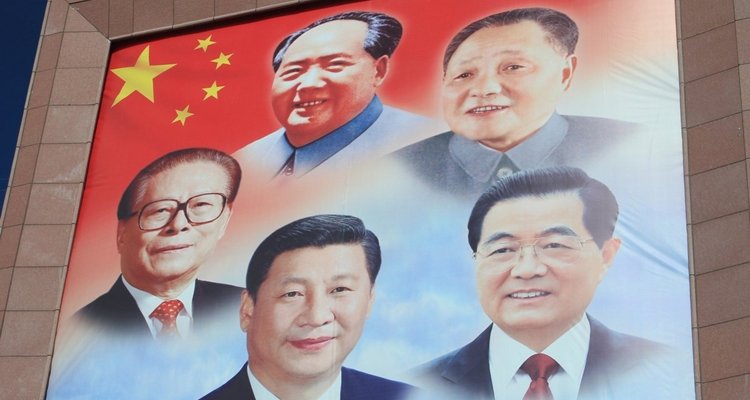
This sounds like what we keep hearing about Xi Jinping, who has occupied top slots in the government and Party of the People’s Republic of China since 2012. But the text is from a Human Rights Watch report published in August 2006 about “Corporate Complicity in Chinese Internet Censorship,” as quoted by Eric Janszen, president of the analytical firm iTulip. The last part is about Hu Jintao’s coming to power in 2003.
Crackdowns
HRW also said back then:
One of the most distressing trends has been a steady crackdown on the Internet. While in the past decade the Internet has ushered in an era of unprecedented access to information and open discussion, debate, and dissent, since President Hu took office the authorities have taken a series of harsh steps to control and suppress political and religious speech on the Internet, including the jailing of Internet critics and bloggers for peaceful political expression.
In fact, China’s system of Internet censorship and surveillance is the most advanced in the world.
No later governance of the country would be as bad as that of Mao, who imposed policies before and after his victory in the civil war that directly and indirectly—but, in the latter case, not unknowingly or unintentionally—killed tens of millions and humiliated and impoverished many more. The periods of most intense and protracted spates of oppression, destruction and murder during his rule over all China (1949 to 1976) have names like Great Leap Forward and Cultural Revolution.
After Mao, things could only improve, and did, with enough liberalization of markets to permit substantial capital accumulation and keep many people from starving. Meanwhile, though, the Chinese Communist Party did not relinquish its totalitarian control over everything. Any tension within the government between moving toward liberalization of the sort demanded by the pro-democracy protesters in Tiananmen Square and elsewhere in the late 1980s, on the one hand, and, on the other, unabated autocratic control was resolved in favor of the latter when troops moved in on June 3, 1989 and started killing protesters. That crackdown also represented a deterioration in the rights situation.
The Chinese Communist Party no longer on a whim initiates mass slaughters of people anytime and anywhere, or seeks to destroy all culture, or inflicts other mass-annihilative policies to the extent directed by the psychotic Mao and his many enablers. But large-scale murders by the government persist in such forms as state-sanctioned forced organ harvesting and state-sanctioned torturing of prisoners to death. Not everyone’s culture is to be targeted for destruction by the state, with all antiques and all books but the Little Red Book thrown into they pyre; just the culture of certain populations, like that of the Uyghurs or the Tibetans. The culture of everybody else is merely inhibited and poisoned by mass censorship and mass propaganda.
The future
In 2006, Eric Janszen commented: “Eventually, the West will have to acknowledge that ‘Buying CCP’ is supporting tyranny, and that the only way to apply pressure on the CCP to reform is to take away the source of its power, the wealth generated by doing business with the party: buying PRC products, accepting CCP loans and investing in CCP state-owned companies….
“It remains to be seen whether US leadership and its people have the political will to stand up to CCP tyranny or will instead allow it to blossom into a global force to be reckoned with on a much greater and even more unmanageable scale….”
Twenty years later, we’ve made some progress in withdrawing sanction and support from the Chinese Communist Party, but not nearly enough.