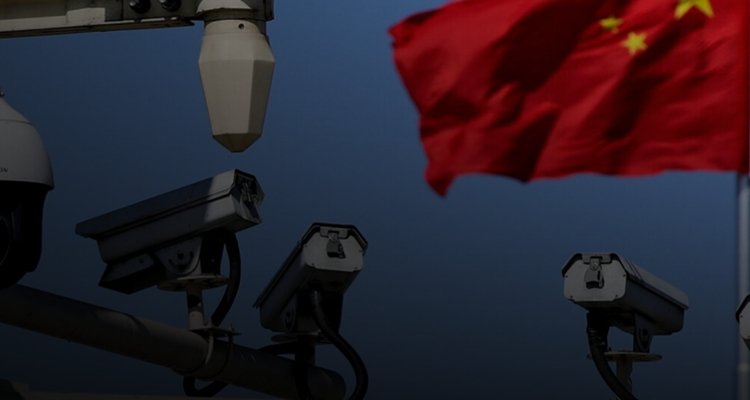
The U.S. Supreme Court is considering whether American firms like Cisco can be held liable for the consequences of providing the Chinese Communist Party with technology to surveil and persecute (April 28, 2026, Reuters).
The U.S. Supreme Court confronted a case on Tuesday with broad implications for human rights litigation in American courts, a long-running lawsuit brought by members of the Falun Gong spiritual movement who have accused Cisco Systems of facilitating religious persecution in China.
The justices heard arguments in Cisco’s appeal of a lower court’s 2023 ruling that breathed new life into the 2011 lawsuit, brought under the Alien Tort Statute of 1789, that accused the company of knowingly developing technology that allowed China’s government to surveil and persecute Falun Gong members.
San Jose, California-based Cisco urged the Supreme Court to further limit the scope of the Alien Tort Statute, which lets non-U.S. citizens seek damages in American courts for violations of international law. The court in a series of decisions since 2013 has restricted the law’s reach, making it more difficult to hold U.S. corporations legally liable for human rights abuses….
Paul Hoffman, a lawyer for the Falun Gong plaintiffs, argued strenuously against Cisco’s views.
“Under Cisco’s theory, even the corporate actors who provided the poison gas for Nazi crematoria would not be liable” under the Alien Tort Statute, Hoffman told the justices.
“There is no basis in international law,” Hoffman said, “for such an absurd result.”
The plaintiffs accuse Cisco of helping to build the Internet surveillance system, the Golden Shield, that the CCP uses to target dissidents (and everybody else, in varying degrees). With Cisco’s help, they say, “China used the system to track and then torture Falun Gong members.”
The case involves one company, Cisco. But if Cisco’s liability is affirmed, many other U.S. tech firms that have done and are doing deals with the Chinese party-state and China’s state-controlled companies would also, if the logic were consistently followed, be in legal jeopardy; including firms like Nvidia that are right now providing advanced technology to China, like high-end microchips, in a manner consistent with current U.S. laws and regulations but not with the Alien Tort Statute of 1789 as often understood.
These U.S. firms—and the U.S. lawmakers and officials of consecutive administrations who gave them a free pass—have had the means to know the purposes that the U.S.-hatched technology would serve and are serving. The reporting suggests, though, that an outcome holding Cisco liable is unlikely, as some of conservative justices on the court “signaled agreement with the stance taken by Kannon Shanmugam, the lawyer for Cisco.”
Also see:
US Global Law: The Alien Tort Statute
“The Alien Tort Statute is a U.S. federal law first adopted in 1789 that gives the federal courts jurisdiction to hear lawsuits filed by non-U.S. citizens for torts committed in violation of international law. When the ATS was drafted in the 18th century, international law dealt primarily with regulating diplomatic relations between States and outlawing crimes such as piracy; however, international law in the 21st century has expanded to include the protection of human rights.”
Associated Press: “Detailed findings from AP investigation into how US tech firms enabled China’s digital police state” (September 9, 2025)
“American tech companies to a large degree designed and built China’s surveillance state, playing a far greater role in enabling human rights abuses than previously known, an Associated Press investigation found. They sold billions of dollars of technology to the Chinese police, government and surveillance companies, despite repeated warnings from the U.S. Congress and in the media that such tools were being used to quash dissent, persecute religious sects and target minorities.”
Associated Press: US government allowed and even helped US firms sell tech used for surveillance in China, AP finds (October 29, 2025)