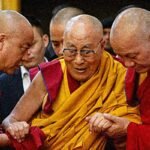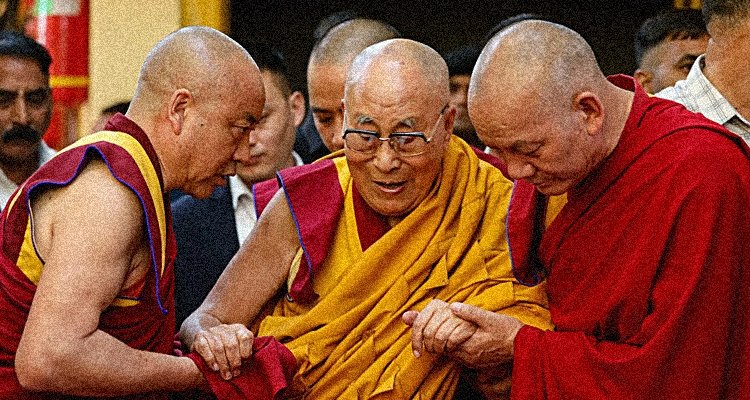
The fact that the current top spiritual leader of Tibet, the 14th Dalai Lama living in exile in India, birth name Lhamo Thondup, now 91, is mortal like everybody else is a geopolitical problem. The Chinese Communist Party wants to name his successor and try to use control of the succession to exercise further control over Tibet. Tibetan leaders want to name him in accordance with traditional procedures (The Economic Times, November 27, 2026).
For Beijing, the succession is about political control over Tibet. For India and the US, it is increasingly about preventing China from converting that control into geopolitical influence.
The immediate trigger [bringing the succession question “into sharper focus”] was the Dalai Lama’s announcement on July 2, 2025, ahead of his 90th birthday, that the institution of the Dalai Lama would continue after his death. More importantly, he declared that the Gaden Phodrang Trust, established by him in 2011, would have exclusive authority to recognise his reincarnation, in consultation with the heads of Tibetan Buddhist traditions.
The Dalai Lama had previously left open the possibility that the institution might end with him. His announcement effectively established an institutional mechanism for succession and directly challenged Beijing’s claim to authority over the process. The Trust would oversee the search and recognition in accordance with Tibetan Buddhist traditions, while China insists that any reincarnation must receive government approval.
The dispute is therefore no longer hypothetical. The central question is which candidate Tibetan Buddhists, governments and religious institutions will accept as the 15th Dalai Lama….
There is another strategic dimension to the issue of succession. India and China share a disputed Himalayan border, where tensions have remained since the 2020 eastern Ladakh confrontation. Tibet’s political and religious future has direct implications for India’s security environment. A Chinese-controlled Dalai Lama could strengthen Beijing’s influence among Himalayan Buddhist communities and potentially extend its political reach into areas adjoining India’s sensitive northeastern and Himalayan regions.
A Dalai Lama recognised through the exile establishment would, conversely, preserve an important source of Tibetan religious and cultural autonomy outside Beijing’s control.
Two Dalai Lamas are indeed almost inevitable. And which will have more influence may indeed somewhat depend on the degree of institutional support each enjoys. The CCP will name a 15th Dalai Lama and the Tibetans will name one, someone living in a country not directly controlled by Beijing, maybe India. Then the more pro-Tibet statements made by the Tibetan-recognized Dalai Lama will compete worldwide with the more pro-assimilationist and pro-CCP statements made by the CCP-recognized Dalai Lama.
A report published by the US-China Economic and Security Review Commission recommends, among other steps, that the U.S. government “put on the record now that the United States will recognize only the successor chosen through the Gaden Phodrang Trust process. Preempting Beijing’s leverage is far less costly than contesting it after the fact.” Except that Beijing’s Dalai-Lama leverage will still have to be contested after the fact, i.e., after the two new Dalai Lamas are in place.
Also see:
USCC.gov: “The Dalai Lama’s Succession: Geopolitical Implications and Policy Recommendations for Congress” (August 2026)
“The succession of the 14th Dalai Lama is already a geopolitical event. It is not approaching—it is underway…. The succession is best understood as a geopolitical contest whose outcome will be determined largely by India.”