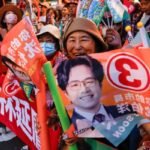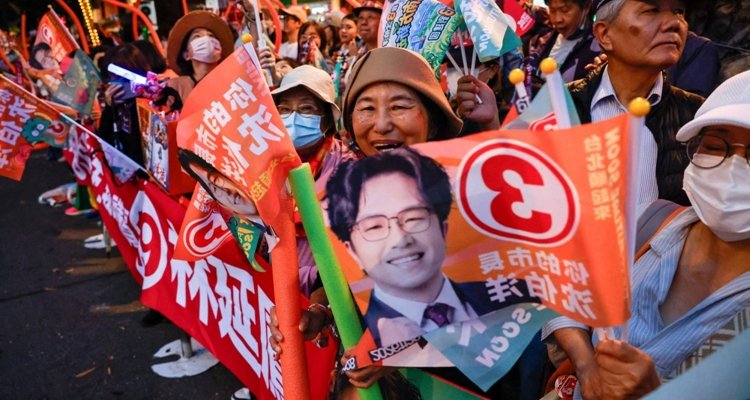
“He has awakened a renewed pro-Taiwan spirit,” says an unnamed official who was careful to speak anonymously (The Japan Times, November 24, 2026).
Anonymously, maybe because the speaker doesn’t want to risk being added to the list of “die-hard separatists.” Beijing has threatened to murder persons in that category.
The Taiwanese are voting on Saturday, November 28, which as I write is today in their part of the world. The ruling Democratic Progressive Party’s candidate for mayor of Taipei is Puma Shen. According to China’s Taiwan Affairs office, he is a “die-hard Taiwan independence separatist in every sense of the word,” one of those persons who are “traitors to the Chinese nation and criminals.” Sort of like calling French opponents of submitting to the Nazis “traitors to the German nation and criminals” in 1940.
In October, Taipei prosecutors indicted four people for putting monitoring devices on a scooter parked outside Shen’s home, issuing arrest warrants for two people from Hong Kong it said were behind the scheme.
The same month, China’s main state broadcaster CCTV said Shen was “deceptively” seeking votes by “playing the oppose-China card” and using “little tricks” by talking about external interference in the election.
China last month imposed sanctions on Shen’s father’s business in China, adding to those already on Shen himself….
Two senior DPP officials said that Shen had tapped into a sense of pro-Taiwan identity and become a symbol of defiance against China—to the surprise of many, even within his own party.
“He has awakened a renewed pro-Taiwan spirit,” said one of the officials, who spoke on condition of anonymity.
Shen may have earned the “die-hard” label in 2024. The Taiwan Affairs Office has “also sanctioned the Kuma Academy Shen co-founded, which runs civil defense courses to prepare people to deal with a possible attack from Beijing.” The CCP has targeted Shen’s dad as well.
He is up against a Kuomintang incumbent, Chiang Wan-an. The KMT “traditionally favors close ties with China,” is the way the reporter puts it. This “tradition” is maybe a couple of decades old, if what we are talking about is the KMT’s tendency to downplay the CCP threat and work to appease the CCP.
Also see:
Taipei Times: “Legislator criticizes China for punishing father’s firm” (June 6, 2025)
“China is punishing him and his family for his support of national security-related amendments and laws, including that lawmakers should be required to report visits to China and be punished for engaging in ‘united front’ work, he said.”
Pulitzer Center: “Taiwan’s Kuomintang at a Crossroads” (July 24, 2020)
“So how did the KMT evolve from anti-communism to a party that is pro-Beijing? The turning point was the reconciliation between the KMT and CCP in 2005, when then-KMT chairman Lien Chan made a historic ice-breaking visit to China.”