The bad news is that an op-ed about Taiwan that gets everything wrong somehow keeps eluding the scrutiny of fact checkers and getting published by Western newspapers (Formosa Review, August 27, 2026).
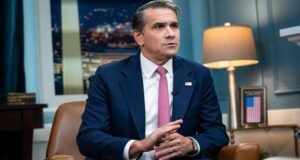
Analysis by Formosa Review indicates that a recent op-ed on Taiwan published in the Chicago Tribune was copied and pasted from a perpetually repackaged op-ed, likely updated with AI, possibly with Chinese models that hallucinated key elements of Taiwan’s history and politics with obvious factual errors. The author, Arthur I. Cyr, is a formerly tenured professor (now emeritus) of International Political Economy at Carthage College in Wisconsin.
The author of the Formosa Review analysis, Sasha Chhabra, finds that Professor Cyr has been recycling “muddled Chinese talking points for 12 years.”
Chhabra regards repeating oneself in different articles for different audiences as per se a form of plagiarism, not his most compelling complaint. More persuasive are his objections to “the egregious factual errors” in the “regurgitated slop” that editors keep accepting. “These errors at best misinform the public and at worst advance China’s propaganda agenda pertaining Taiwan.”
One example:
Cyr claims that, following the January 2024 election of Lai Ching-te [to the presidency of the Republic of China], “China [sic] media have been relatively restrained about this election result compared to past extreme rhetoric.”
He (or an AI agent) likely took the language of “relatively restrained” from a post-election Council on Foreign Relations report by David Sachs, which claimed China had a relatively restrained response in the days immediately following the election. In reality, China responded to the election by claiming that the election “cannot represent the mainstream public opinion on the island” and attacking foreign leaders for congratulating Lai and Taiwan on the successful election.
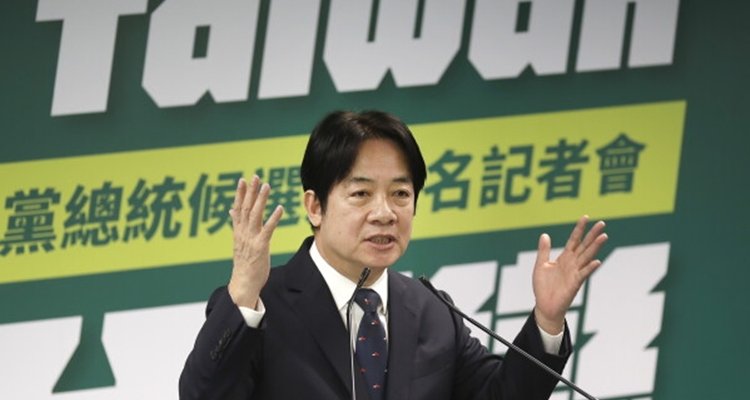
Just three days after Lai’s May 20, 2024 inauguration, China began massive aggressive war drills in the waters surrounding Taiwan, with Chinese officials stating that the drills should be interpreted as “strong punishment” to Mr. Lai [shown above]. Cyr is far from the only commentator who echoed the “relatively restrained” interpretation following Lai’s election, but Cyr’s August 2026 article seems to be entirely unaware of any events after May 22, 2024. Most commentators, including on the pro-China end of the spectrum, have since revised their takes.
Another:
Cyr next writes bafflingly: “The first DPP [Democratic Progressive Party] government, from 2000 to 2008, was able to finesse the political challenges with Beijing….”
In reality, the first DPP government, under President Chen Shui-bian, faced unprecedented political pressure from China, including repeated threats to invade Taiwan, culminating in the 2005 passage of the Anti-Secession Law, a Chinese law that, while having no jurisdiction over Taiwan, asserts Beijing’s right to militarily invade Taiwan.
And:
Cyr then states one of the most egregious outright lies in the entire piece by stating that “Expatriate Chinese also vote in Taiwan elections.”… Only Taiwanese citizens have the right to vote in Taiwanese elections. Certainly, there are some naturalized citizens of Taiwan who are of ethnic Chinese background and may consider themselves “expatriate Chinese,” but this is no category under Taiwanese law. Even expatriate Taiwanese are not eligible to vote in Taiwanese elections, with a prohibition on absentee voting and a requirement to maintain household registration in Taiwan to be eligible to vote.
Whether all of Cyr’s “lies” are lies, I don’t know. Perhaps indolence, beyond a certain point, amounts to the same thing.
The good news
The good news per Chhabra is that a project has been launched to encourage Taiwanese scholars, analysts and commentators who know what they are talking about to submit their thoughts more regularly to Western publications and thereby countervail the Professor Cyrs of the world.
The rationale for the Taiwan Advocacy Project has been explained by a Western cofounder, William Stanton, former director of American Institute in Taiwan. His Business.today.com.tw piece appears first in Chinese, then, immediately following, in English (August 25, 2025).
I’ve had in-depth conversations with many Taiwanese scholars and policy analysts. Their understanding of cross-Strait relations, national defense, regional diplomacy, and semiconductor strategy is often strikingly incisive. But regrettably, their views tend to remain within the Chinese-language media or domestic fora. From my observations, most Taiwanese experts lack the habit—or perhaps the motivation—of submitting commentary to major international outlets….
This initiative is not about building another massive think tank, nor does it rely on government funding. Instead, it adopts a targeted, practical approach to support and encourage Taiwanese scholars and experts to publish in major global media outlets. Through concrete incentives and fast-turnaround editorial support, the project lowers the barriers to submission, increases the likelihood of publication, and—most importantly—gives Taiwanese perspectives a real chance to reach the world.
A great idea; doesn’t seem to have made a splash yet.