The White House plausibly suggests that since 2018, more than 40 countries have been helping the People’s Republic of China evade U.S. tariffs to the tune of an estimated $10 billion to more than $100 billion in lost customs revenue annually, plus $19 billion to $26 billion in associated losses of federal tax revenue (The Hill, August 13, 2026).
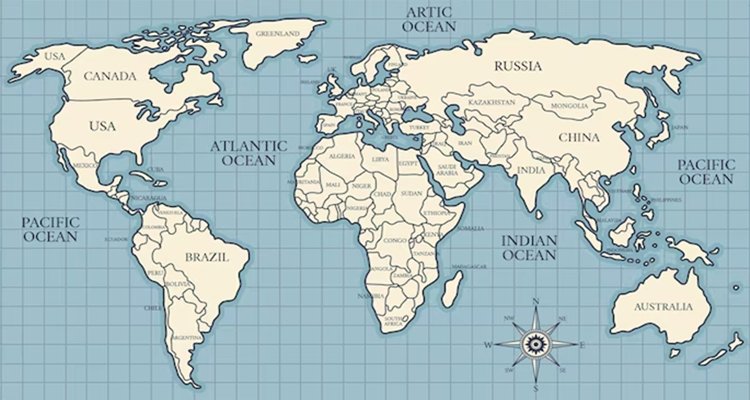
The 40-plus countries are “associated with elevated illegal transshipment risk.” What’s happening is that Chinese goods headed for the United States are first being routed to non-U.S. countries, then shipped from those other countries as if they were the point of origin. The recent course of trade-good events is elaborated in an August 2026 White House report, “The Great Transshipment Scam: Rise, Scope, and Costs.”
The scam
“Any higher-tariff country may seek access to the U.S. market through a lower-tariff country,” observes the Executive Summary, “and any lower-tariff jurisdiction may benefit from serving as a production, processing, warehousing, or logistics intermediary for higher-tariff countries.”
China provides the most developed historical example of this conduct…. The overall success of these tariffs co-exists with the abuse, by exporters, of the tariff differentials that they contribute to. After their imposition, Chinese exporters increasingly routed goods through third countries. Products that previously moved directly from China to the United States were shipped through jurisdictions where limited assembly, finishing, repackaging, relabeling, or documentation changes could create the appearance of a different national origin. Over time, these practices contributed to the development of a global network of production hubs, logistics platforms, free-trade zones, bonded warehouses, processing corridors, and re-export centers….
As China’s direct share of U.S. goods imports declined, the combined share supplied by identified transshipment countries increased. This relationship does not establish that all displaced Chinese trade was illegally transshipped. Some of the shift reflects legitimate changes in production, investment, and sourcing. However, the timing, magnitude, and direction of the two trends support further investigation of the extent to which tariffed goods were rerouted through third countries.
Getting an idea of possible tariff-revenue losses and of associated tax and economic losses means relying on five different “government and private-sector estimates of potential transshipment or related trade-transfer exposure….
“These estimates are not additive and are not directly comparable. They use different datasets, methodologies, product screens, and definitions of illegal transshipment. Nevertheless, they converge on the conclusion that the scale of potential tariff evasion and origin shifting is economically significant.”
With respect to one possible “central” case “of $75 billion in annual illegal transshipment,” we are told that the report “estimates approximately 450,000 jobs displaced; $113 billion to $150 billion in reduced annual gross domestic product; and $19 billion to $26 billion in associated federal revenue losses. These figures are model-based estimates rather than observed job counts. They are intended to illustrate the potential scale of the economic exposure.”
Known knowns
That the data can’t exactly be pinned down is unsurprising, since the persons who have been exporting and re-exporting to get around the tariffs are disinclined to transmit even anonymous tallies to U.S. Customs.
So we don’t know the dollar amounts of either the transshipments or the lost U.S. tariff and tax revenue. We just know that the numbers are hovering in an area. But we know that “the timing, magnitude, and direction” of two trends are comparable. These two trends: decline in PRC import share and increase in “combined share supplied by identified transshipment countries.”
The Trump administration hopes that a new artificial intelligence system called Detective Border will be able to crunch through shipment data in such a way as to distinguish legitimate imports from “illegal pass-through trade” and “high-risk shipments” and so provide a basis for “interdiction, duty collection, penalties, and exclusion.”
Also see:
White House: The Great Transshipment Scam: Rise, Scope, and Costs