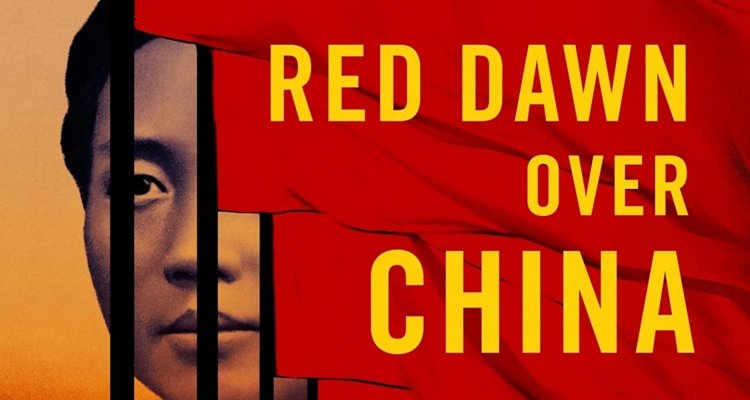
Although he sees merit in Dikötter’s acclaimed new book on China, Red Dawn Over China: How Communism Conquered a Quarter of Humanity, Clark Aoqui Wu is not a fan and contends that the flaws outweigh the virtues (Engelsberg Ideas, April 14, 2026).
Wu acknowledges a major virtue of Dikötter’s trilogy on Mao’s murderous rule, The Tragedy of Liberation, Mao’s Great Famine, and The Cultural Revolution. In these, the author “marshalled provincial and county archives with devastating effect, painting the Maoist era not as a misguided experiment but as a sustained campaign of violence against China’s own people. Whatever one thought of Dikötter’s interpretive choices, no serious reader could dismiss the archival spadework.”
Dikötter has thus forced western readers “to confront the catastrophic human costs of Chinese Communism.”
The allusion to the possibility of disagreement with “interpretive choices”—has any historian escaped?—is a hint of the reprimands and backhanded compliments in store for Red Dawn Over China.
The minuses of the Dikötter’s latest contribution, according to Wu:
● Dikötter says that the set of 300 volumes of Party documents from 1923 to 1949 which he relies on in Red Dawn “has had only sporadic use by historians.” The claim is misleading, says Wu. “The volumes have long since been digitised, scanned into PDF format, and circulated on the Chinese internet. [They are] extensively cited not only by regime-approved scholars but also by the country’s liberal historians and by its thriving community of unofficial, independent researchers, many of whom have published penetrating critiques of the CCP’s official narrative at considerable personal risk.”
● Dikötter also downplays the extent to which historians have relied on Soviet archives to show the role of the Soviet Union in promoting Chinese communism. “The arguments Dikötter presents as revelations—that the CCP was Moscow’s creature, that the Long March was a desperate rout rather than a triumphal epic, that Mao’s promises of democracy were cynical fabrications—have been the common currency of serious scholarship for at least 30 years.”
● Wu says that “most western academics who study modern China, and who have spent decades picking apart exactly the kind of triumphal narrative Dikötter ascribes to them” are not the victims of the CCP fairy tales that Dikötter says “all too often” dominate popular and scholarly books on the history of modern China.
● The book lacks the narrative power of previous volumes by Dikötter. The book “skims where it should dive, and catalogues where it should narrate.”
● The explanation of CCP victories is faulty. “Dikötter is content to explain the CCP’s victory largely through the application of terror, attrition and ‘human wave’ tactics. This is not wrong, exactly, but it is radically incomplete. The Communist victory in the civil war was a feat of strategic planning, intelligence gathering and operational flexibility that cannot be reduced to sheer brutality and demographic expenditure.”
Wu further suggests that the author pays too little attention to the extent to which the CCP’s intelligence agents “penetrated the Nationalist high command…not an obscure finding.”
● Wu’s critique of Dikötter’s observation that communism was never widely popular is odd. “That the Party was numerically tiny does not mean it was irrelevant; it means it was operating exactly as Lenin prescribed. Dikötter seems to treat low membership as evidence that Communism had no purchase in Chinese society, when in fact it is evidence that the Leninist model was functioning as designed: a small, disciplined vanguard mobilising and directing a vastly larger population through a combination of ideological appeal, organisational superiority and coercive violence.” Would Dikotter dispute this summation?
● Also: “Equally disappointing is Dikötter’s failure to account for the genuine ideological magnetism of the Communist cause among China’s educated classes. He acknowledges that ‘many thousands of students, teachers, artists, writers and journalists poured into Yan’an’, and that ‘the vast majority were idealists, young volunteers keen to fight for equality, justice and freedom’….
“Dikötter never truly grapples with the question of why so many of China’s best and brightest were drawn to a movement that Dikötter himself portrays as little more than a criminal enterprise sustained by Soviet money and guns. The answer, of course, is complex: it involves the genuine failures of the Nationalist government, the appeal of a modernising ideology in a semi-colonial society, the attraction of internationalism and egalitarianism in an era of global upheaval, and the CCP’s skill at presenting itself as the bearer of national salvation. But Red Dawn has no room for this kind of analysis. It is too busy tallying atrocities.”
The impression I get from Dikötter’s previous works is that he does not deny the importance of communist ideas or their appeal to many of the disgruntled. But he has set a task for himself that is different from tracing the process of their influence. His job is to show what Mao and the CCP have actually done in enough detail that no one can be confused about what happened or the vicious motives involved. The CCP was and is a criminal enterprise that uses ideology as one of its weapons, the kind that disarms the minds of its victims.
● Wu also laments “one-dimensional critique” of America’s policies toward China during the Truman administration.
The pluses, or plus-and-minuses, according to Wu:
● The book’s tracing of the role of the Soviet Union. “The book’s emphasis on Soviet influence in shaping the Chinese revolution is, in one sense, its strongest thread. Dikötter traces Moscow’s hand from the very founding of the CCP, through the torturous alliances and betrayals of the 1920s and 1930s, to the decisive Soviet intervention in Manchuria in 1945-46 that transformed the military balance. He quotes extensively from sources to show how Soviet money, advisers and weaponry sustained the Chinese Communist movement through its darkest hours.”
But—this kind of work has been done before. (So…is it somehow mistaken to treat the same subject and provide a fresh perspective? Dikötter seems to cover both too much of what others have covered and too little.)
Again, too, Dikötter oversimplifies. His account “sometimes reads as though the CCP were simply Moscow’s franchise in East Asia, a characterisation that obscures as much as it illuminates,” a sentence that obscures more than it illuminates.
● Many readers of Red Dawn “will learn things they did not know,” grudging praise that also applies to newspaper articles. But the archive “is less novel than advertised, the argument more familiar than claimed, and the narrative, for all its grim detail, curiously bloodless where it should be alive.”
Perhaps Dikötter underestimates the extent to which non-commie chroniclers reject the Party line. But since so many people who should know better do uncritically accept fairy tales that the CCP tells, even while affecting a judicious skepticism, I’ll be agnostic about this claim for now. As well as about the other asserted shortcomings. And I suspect that Dikötter is as worth reading now as he ever was. The largest-looming complaint—that the book fails as a review of the secondary literature—would be weightier if Red Dawn Over China were primarily a review of that literature.