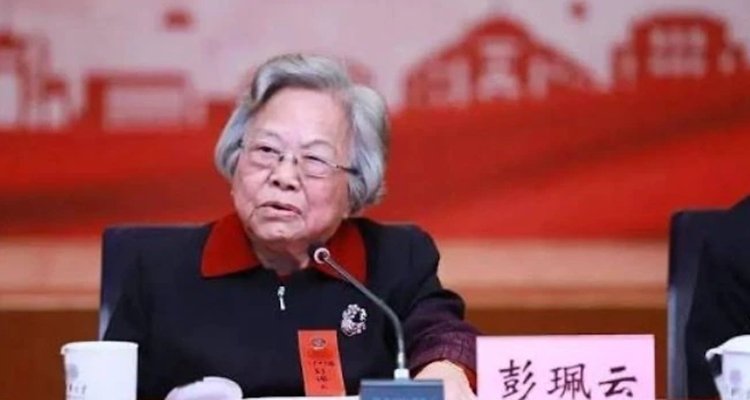
Peng Peiyun, who has just died after a very long life, had a tough job, some say. But things were not as tough for her as they were for the Chinese women subjected to the regime of coercive birth control that she was responsible for enforcing (India Today, December 25, 2025).
Social media platforms have been filled with anger and criticism rather than condolences following the death of China’s one-child policy czar, Peng Peiyun. Peng, who was tasked with enforcing the draconian policy from 1980-2015, has become the subject of hate as her death reopened old wounds over the long-abandoned population control measure.
Peng died on December 21 in Beijing, with the Chinese Communist Party calling her an “outstanding leader” in population policy and women’s and children’s issues. However, for lakhs [great numbers] of Chinese citizens, her passing was a moment of reckoning. Several users took to Weibo and X to recount the pain and trauma that their mothers or close ones underwent during the controversial population control drive….
The policy period saw women, especially those in rural areas, enduring forced abortions and sterilisations. Those opposing it were beaten and abused by local enforcers. The period was also marked by slipshod medical procedures for contraception. A CNN report said around 20 million baby girls “disappeared” due to sex-selective abortions or infanticide.
The New York Times reports:
Ms. Peng had thrown herself into the Communist revolutionary cause as a teenager and rose as an enforcer of the party’s policies in universities. But as a woman, she was a rarity in the higher ranks of government, and as the minister of the family planning commission, she saw the suffering wrought by China’s campaign to drastically reduce birthrates.
Rural women in particular endured forced abortions and sterilizations, beatings by local cadres of enforcers and slipshod medical procedures for contraception.
As the Times tells it, she was really a warrior, sometimes, against all this:
During the 1990s, Ms. Peng tried to make enforcement of the restrictions on family size—one child for most urban families, often two in the countryside—less brutal. Many local officials, under intense pressure to meet mandatory birth goals, bristled at her efforts. Some dismissed her as a naïve outsider.
Steven Mosher’s first book, Broken Earth, was largely about the consequences of China’s one-child policy. The policy was just beginning to be imposed when as a Stanford graduate student he interviewed Chinese villagers in 1979 and 1980. Stanford University was so dismayed by the party-state’s dismay over Mosher’s findings, which he first shared in an article published in Taiwan, that it refused to grant him a PhD. Stanford complained that Mosher had jeopardized “the opportunity of other researchers to carry out research in the same area…and might harm the populations the anthropologist would like to assist.”
In 1983, Mosher reported that abortions “were regularly carried out on women seven, eight, and even nine months pregnant, often against their will, and that there were even occasional cases of officially instigated infanticide.”
Mosher has quoted Deng Ziaoping’s injunction to subordinates about getting the birth rate under control: “Use whatever means you must. Just do it. With the support of the Communist Party, you have nothing to fear.”
Peng Peiyun followed the advice for many years. Eventually, says the Times obit writer, she “worked to soften,” then end, the one-child policy; which, if true, many of her victims do not regard as entitling her to any forgiveness.