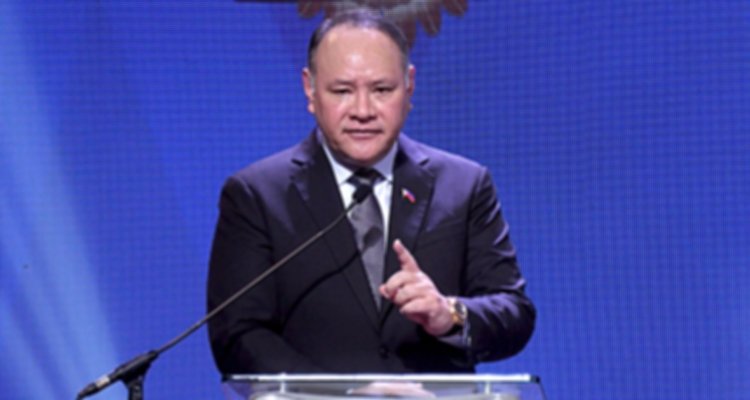
A couple of weeks ago, the PRC escalated its “feud with Philippines” by banning the Philippine defense secretary, Gilberto Teodoro Jr., and his family from China. What’s sticking in the craw of the Chinese government is that Teodoro understands the Chinese threat and is not shy about expressing his understanding (Bloomberg, June 11, 2026).
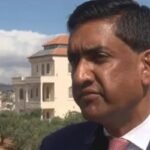
“That is truly what they do to those who speak the truth against their deception,” Teodoro (shown above) said in response. “I will just keep doing my duty and uphold our nation in the face of the wickedness they are committing here and even in our seas.”
The Philippines and Taiwan
The Marcos government has been doing at least some of what it can to defend itself, and it has said that if the mainland ever invades Taiwan, the Philippines, like Japan, probably won’t just watch.
Manila and Tokyo have announced maritime border talks covering waters east of Taiwan, a move that prompted China’s countermeasures and further strained relations in recent weeks.
Teodoro struck a similar note at last year’s Singapore forum, calling a lack of trust in Beijing “the biggest stumbling block” to resolving competing claims in the South China Sea, a strategic waterway and a potential flashpoint.
Further angering China, President Ferdinand Marcos Jr. warned in May that the Philippines would likely be involved in any conflict over Taiwan due to its proximity.
Beijing views Taiwan as an inseparable part of its territory to be retaken one day, by force if necessary. Chinese authorities have sought to isolate Taipei diplomatically, imposing travel bans on New Zealand lawmakers last week after they visited Taiwan.
The Teodoro sanctions follow a familiar script.
According to Manila’s Department of Foreign Affairs, the ban on Teodoro is “an unfriendly act…. Such measures do not contribute to building mutual trust, managing differences responsibly, or creating the conditions necessary for constructive engagement between our two countries.”
The statement is both right and wrong. The dangerous implication is that if for a certain period of time, Beijing mouths the right words and simulates the right diplomatic gestures, conditions will then have emerged which permit “mutual trust.” (As a sage once said, “Don’t trust China….”)
Man and message
In commentary for PhilStar, two Philippine professors suggest that the ban, China’s first of a sitting Philippine cabinet member, shows that “Teodoro has hit a nerve. He has been the administration’s most vocal advocate of a firm posture on the West Philippine Sea issue and has often commented freely on maritime incidents, military modernization and security cooperation, usually at China’s expense.
“The last straw for Beijing appears to be his May 31 speech at the Shangri-La Dialogue in Singapore, where he told an audience of defense officials, military officers, diplomats and security experts that, in the Philippine experience, negotiating with China was ‘not a path to conflict resolution but a means of [China’s] gaining advantage.’ That Beijing sulked at those remarks is revealing.”
The authors point to “divided messaging” about China in the Philippine government and suggest that President Marcos “must soon choose” between opposite ways of responding to the Chinese threat. “Backing Teodoro would mean owning the substance of his Shangri-La message, not just backing the man. Folding would mean trading candor for calm in the West Philippine Sea, which may or may not come….”