Last week Lei of Lei’s Real Talk noted that after an unexplained eight-day hiatus, the PLA’s military planes were revving up again for standard drill-and-harassment duty around Taiwan. But the resumption was partial, not a return to full belligerent form.
Lei thought that this temporarily more modest stance was consistent with the CCP’s hope of influencing military budget negotiations in Taipei. The idea was to foil the ruling Democratic Progressive Party’s goal of substantially increasing military spending, including on major weapons packages from the United States, by injecting the thought “Hey, maybe the CCP isn’t so bad after all” into the assessments of lawmakers in the Legislative Yuan. (Can anybody be that gullible? Well, the Chinese Communist Party has gotten this far…)
Meanwhile, a mid-March deadline loomed by which time the Taipei government had to move forward with planned arms purchases from the United States lest vexing complications ensue.
Two things have happened. First, the latest round of wrangling in Taipei over military spending has ended (Reuters, March 13, 2026):
Taiwan’s parliament authorized the government on Friday to sign U.S. agreements for four arms sales packages worth some $9 billion, after officials warned that Taipei would go to the back of the line if it missed the deadline, sending the wrong message to Washington.
The back and forth on Taiwan’s defense spending has provoked concern in the United States, as it is the most important international backer and arms supplier of the Chinese-claimed island, despite a lack of formal diplomatic ties….
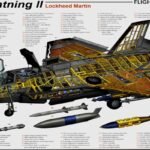
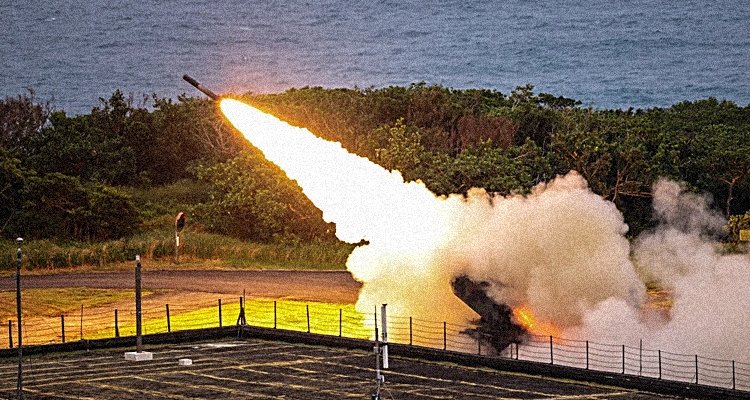
The weapons covered include TOW anti-tank missiles, M109A7 self-propelled howitzers, Lockheed Martin-made Javelin missiles and the HIMARS multiple launch rocket system, worth around $9 billion in total and part of an $11 billion package Washington announced in December.
President Lai Ching-te’s government has tried to get parliament to pass $40 billion in extra defense spending, but the opposition [the Kuomintang and the Taiwan People’s Party], which controls the most seats, says the proposals are unclear, and it cannot be expected to pass “blank checks.”
Both opposition parties drew up their own, cheaper alternatives, but the defense ministry said the letters of offer and acceptance for the weapons have to be signed with the United States by Sunday, or Taiwan risked losing its place in the production and delivery line.
Parliament’s formal authorization on Friday came a day after lawmakers from both sides agreed that the government could sign the deals in advance, even if spending reviews were not approved in time.
Second, the PLA’s planes around Taiwan are again in full intimidation mode (Associated Press, March 15, 2026).
[The Republic of China defense ministry] detected 26 Chinese military aircraft around the island on Saturday, with 16 of them entering its northern, central and southwestern Air Defense Identification Zone. Seven naval ships were spotted around the island, it reported.
The increased number of aircraft came after the ministry reported a fall that left analysts scratching their heads about what China’s military may be up to.
Taiwan didn’t report any Chinese military planes that went beyond the median line and entered the zone for a week from Feb. 27 to March 5. After two were detected on March 6, the next four days had none. Such flights resumed in small numbers between Wednesday and Friday.
The drop coincided with the annual meeting of China’s legislature. While such flights have fallen in the past during major events and public holidays, this year’s fall was more prominent than in the past.
Analysts said the meeting could not be the sole reason behind the recent drop. Another potential factor could be a desire to calm the waters with Washington weeks before a visit by U.S. President Donald Trump….
Some observers also suggested the decline may be driven by a shift to a next phase in China’s military training and modernization, with the army appearing to be exploring a new model for joint training between its forces.
Such explanations of the lull in China’s drills have been discounted by Lei, who says that they don’t explain the timing: the Taiwan-nagging planes were grounded almost immediately after commencement of Operation Epic Fury in Iran.
She suggests that because the CCP was shocked by the ease with which China-provided defenses in Iran, as in Venezuela, had been penetrated, it pulled back from the drills around Taiwan to reassess things; also to make it easier for Taiwanese lawmakers to downplay the need to fend off the Chinese military.
Now the current negotiations in Taipei over military spending are over and the vacation for PLA pilots serving Taiwan-harassment duty seems to be fully over as well.