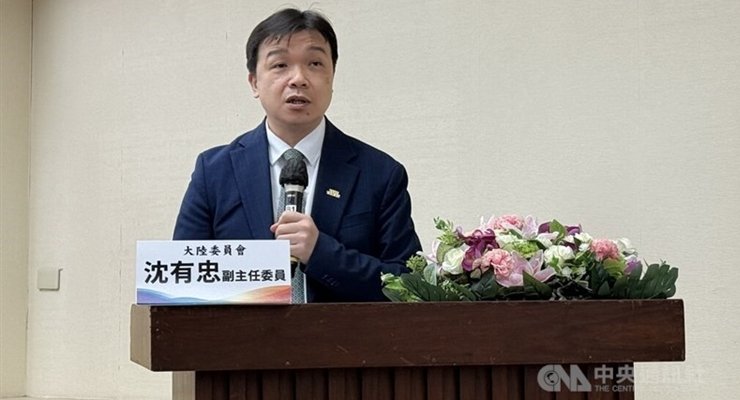
Mainland China continues to try to bend the results of Taiwan’s elections, including the local ones to be decided November 28, in its direction. And the techniques are “becoming increasingly sophisticated with advances in technology,” says the deputy head of Republic of China’s Mainland Affairs Council, Shen Yu-chung (Focus Taiwan, November 23, 2026).
“Chinese interference in Taiwan’s elections is nothing new,” Shen [shown above] said, citing alleged efforts to finance candidates, influence public opinion through cognitive warfare and channel money into elections through underground betting operations.
However, Shen said China’s advances in artificial intelligence and facial recognition technology had made its methods of infiltration increasingly sophisticated, warning that information collection could extend beyond elections into people’s daily lives.
He said China’s attempts to undermine Taiwan’s democracy were not confined to election periods, urging Taiwanese people to remain vigilant while calling on Beijing to view Taiwan’s elections objectively and understand its democratic system.
One case Shen particularly highlighted involved Taiwan People’s Party Taoyuan City Council candidate Chou Hsiao-yun, who was indicted by New Taipei prosecutors on Nov. 20 on several charges, including Anti-Infiltration Act offenses.
“It has escalated into a very serious national security issue,” Shen said, referring to allegations that Chou helped collect Taiwanese people’s facial images for fake social media accounts….
The [Chinese] operatives allegedly ran around 20,000 fake Facebook accounts, using likes and comments to create the impression of widespread support for Chou.
The chances that as a result of Shen’s words, autocratic Beijing will now “view objectively” or “understand” Taiwan’s elections and democracy in so sympathetic a way as to refrain from any further attempts at election interference are zero.
More likely to succeed is the prosecution of Chou Hsiao-yun. She denies the allegations against her, which include charges that she received substantial funds in 2025 and 2026 from CCP-connected actors to help fund what turned out to be a failed bid to join the New Taipei City Council. “I have never accepted instructions from any foreign forces, nor received ‘red money’ or foreign funds to conduct election activities,” Chou has said on Facebook. She faces a three-and-a-half-year prison sentence.
Also see:
Reuters: “Taiwan tells Meta thousands of China-linked accounts seek to influence elections” (November 20, 2026)
Mainland Affairs Council: “Legislative Yuan Passes Anti-Infiltration Bill to Strengthen Defense for Democracy…” (December 31, 2019)
“The Anti-Infiltration Act aims to strengthen insufficient punitive measures against ‘local collaborators’ in existing laws, such as the Political Donations Act, Referendum Act, Lobbying Act, and Election and Recall Act to strengthen defenses of Taiwan’s democracy.