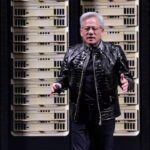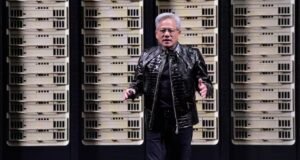
“Nvidia’s board says it relied on input from senior U.S. officials to conclude that bringing Jensen Huang back posed no national security risk. I have some questions. Who in our government weighed in? What did they tell the board? And on what basis did the board conclude there was no risk?”
The New York Times, quoting these queries made by Republican Senator John Curtis, believes that until now members of his party have only “rarely used their oversight power to question decisions by Mr. Trump” (November 23, 2026).
Questions
The claim doesn’t seem quite true, judging by this and this and this and this and this and this. But maybe the pace of GOP questioning of administration decisions is picking up. In any case, some Republicans definitely want answers about the circumstances surrounding the Huang rehire.
Republican Senator Pete Ricketts says, “Nvidia’s decision today doesn’t excuse Jensen Huang from testifying before Congress. It also doesn’t absolve Nvidia of answering for national security concerns and unaccounted-for chips.”
Trump foe Senator John Cornyn asks: “Did the FBI do a defensive briefing of Huang? If not, why not? If so, what did they tell him about the risk? Did he ignore it?”
Republican Representative Don Bacon accuses the Trump administration of an “inexplicable desire to save Huang.”
Republican Senator Kevin Cramer said “that while it was Nvidia that would bear the ‘legal and reputational’ risk of rehiring Mr. Huang, ‘the national security risk is passed along to the United States military and its citizens.’ ”
Cramer urges his colleagues to pass “the strictest export controls possible,” presumably on U.S. supertech that would otherwise end up in the People’s Republic of China.
The Times adds that recent developments “have intensified a broader congressional investigation, led by Republicans, into Nvidia’s role in the export of advanced artificial intelligence chips to China.”
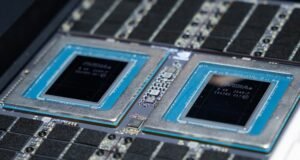
Much of Nvidia’s role is not mysterious: it engaged in intensive and persistent lobbying, led by Huang, for looser regulations on sending its most advanced chips to China; the Trump administration then loosened some of the relevant export controls. The real question is to what extent Nvidia has helped third parties, e.g., Megaspeed, to illegally circumvent export controls on Nvidia chips before and after the U.S. relaxed the controls.
Mega-slow on Megaspeed
Another November 23 New York Times story reports that the Commerce Department has finally “added Megaspeed to the government’s entity list, a trade blacklist that will prevent companies from shipping U.S. technology, like Nvidia’s chips, to the firm without first obtaining a government license.”
Megaspeed joins MSFusion, Speedmatrix, Apex Enterprise Solutions, and Swiftdata. Megaspeed is listed three times in the Federal Register’s announcement of these additions because although headquartered in Singapore, the company also has offices in Malaysia and Thailand.
According to the Times’s recapitulation, Megaspeed “is currently under criminal investigation by the Justice Department for allegedly smuggling A.I. chips to China, in contravention of U.S. law. The firm had been established by a woman, Alice Huang, who U.S. officials believed to be a Chinese intelligence asset and who had an affair with Nvidia’s chief executive, Jensen Huang.”
The Commerce Department “began looking into Megaspeed” in 2024, “after the formerly unknown firm began buying billions of dollars of advanced A.I. chips and shipping them from California to Malaysia.”
A Commerce Department official visited one of the company’s data centers in Malaysia in late 2024, and found the server equipment to be packed up in boxes rather than installed, arousing suspicions about smuggling.
American and Singaporean officials met with Ms. Huang [Alice Huang, the Jensen Huang paramour and suspected CCP spy] in Singapore to inquire about the company’s purchases in June of last year. Singaporean officials also detained Ms. Huang for questioning.
The Commerce Department’s work on the case was suddenly halted soon after, following an unusual interaction between Nvidia’s general counsel and a top department official.
We should cut Commerce Department secretary Howard Lutnick at least a little slack, a National Review writer enjoins us. “Lutnick’s critics underestimate China’s rare earth leverage: Restricting chip exports carries real costs for American manufacturing and defense.”
Though, “to be clear,” Lutnick is “still fundamentally wrong strategically.”
And “the administration and Lutnick’s Commerce Department have been lackadaisical. Fresh reporting [linked below] indicates that Commerce rubber-stamped licenses for Nvidia to transfer more than 800,000 advanced chips to dubious third parties that should have been seen as patent cut-outs for China.”
Etc. A mess.
Also see:
The New York Times: “Nvidia Asked to Sell Chips to Companies Tied to Chinese Military and Megaspeed” (November 19, 2026)
“Lawmakers released confidential information showing the Commerce Department had approved sales of more than 800,000 A.I. chips to Chinese companies, some with military ties.”