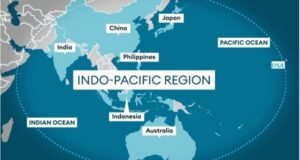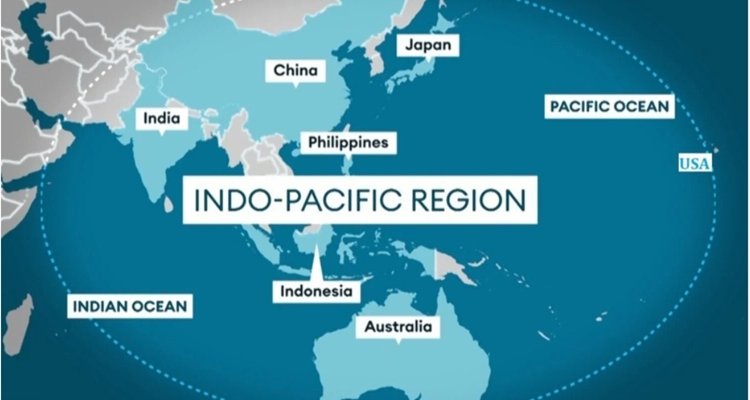
“Aggressive regional signaling” in recent weeks by CCP partner Russia confirms that if the People’s Republic of China blockades and/or invades Taiwan, Russia might not be content to remain a bystander. Russia’s recent actions in the Pacific send this and related messages, says the ASPI Strategist (November 20, 2026).
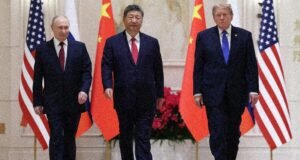
On 17 November, two Russian bombers carried out an East Asian excursion in which they entered the South Korean air defence identification zone (ADIZ), violated Japanese territorial airspace, and entered the Taiwanese ADIZ for the first time since 2010. This took place just days before a historic meeting between presidents Donald Trump, Vladimir Putin and Xi Jinping in Shenzhen, sending a message that Russia was willing to flex its military muscle in support of the Sino-Russian partnership in the Pacific. This and other recent aggressive regional signalling from Moscow are reminders that Russia’s participation in a war over Taiwan is plausible and that Russian grey-zone activity in the Indo-Pacific is a growing threat….
Aggressive Russian aerial activity around Japan, including breaches of its territorial airspace, has grown increasingly common in recent years. There was also nothing new in the traversing of the South Korean ADIZ—a zone, mostly in international airspace, where a country requires approaching aircraft to report themselves. However, this was only the second time Russian military aircraft are known to have entered the Taiwanese ADIZ since the fall of the Soviet Union. Doing so isn’t needed to fly from Russia to Southeast Asia.
This latest outing is therefore an escalation of previous trends, suggesting that Russia’s willingness to flex its muscle in the Indo-Pacific in ways congenial to China is growing.
Whatever the limits of Sino-Russian partnership may be, Russia’s recent incursions in various Pacific regions suggest “that the partnership can stand firm on major strategic issues in the Indo-Pacific.” Russia is telling Trump that at least in this part of the world, “Russia stands ready to assist China and supports its ambitions to dislodge the US-led order.”
All of which makes the hazy assertions of the joint U.S–China–Russia statement issued after the November 19 trilateral meeting in Shenzhen even more meaningless and irrelevant, if possible.