Some possibly good news on the shipping-U.S.-superchips-to-China front: Nvidia has stopped shipping to China even those cutting-edge chips that it is federally authorized to send.
Although Nvidia “sold $2.4 billion worth of licensed Hopper-generation data centre products to China in the quarter ended October 25,” there are no “current plans” to ship any more (Reuters, November 18, 2026).
Hopper-generation products include Nvidia’s H100 and H200 chips.
Sounds like this could mean a long-term shift away from helping to arm Beijing, even before the U.S. institutes stricter export controls. Nvidia’s official statements also include wiggle room, however.
Interim CEO Colette Kress says, “Our guidance does not have any licenced Hopper data centre products included, and we are no longer shipping licenced Hopper data centre products to China.” But:
She did not explain why Nvidia had stopped shipping the processors or whether the halt would be permanent….
Following a summit with Chinese President Xi Jinping last year…US President Donald Trump said he would allow H200 sales to approved Chinese customers.
The US eased its licensing policy for the H200 in January, allowing export applications to be reviewed individually subject to security conditions.
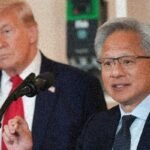
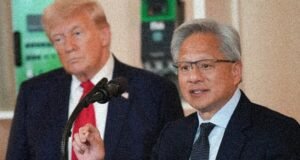
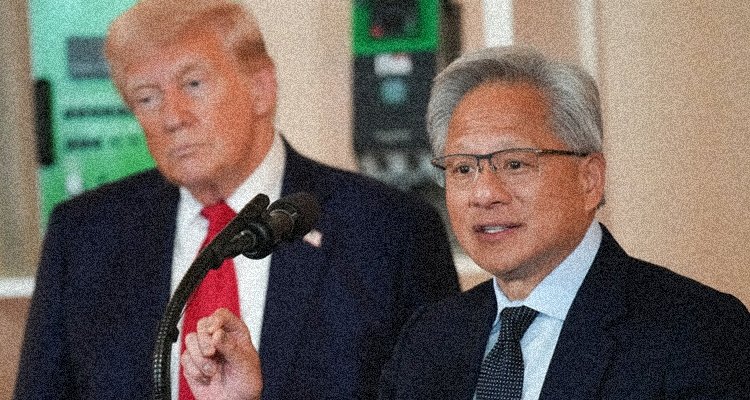
That decision followed months of lobbying from [former Nvidia CEO Jensen] Huang [shown above with President Trump], who stepped down as he faced allegations he had extramarital affairs with an alleged Chinese spy and two Nvidia employees.
The U.S. government’s individual approval of export applications “subject to security conditions” may have rendered the pace of sending Nvidia chips to China slower than it would have been without those reviews. But once a particular shipment to a particular Chinese company is approved, what can any attached security conditions accomplish?
After a shipment arrives in China, chips and servers can be turned over to the PLA or some militarily linked company even before the boxes are opened. Even if they stay with the U.S.-approved buyer, there can be no guarantees about how the computing power will be used. If U.S. concerns about security had been serious and thought-through in January, export-to-PRC policies for the H200 and other superchips would never have been relaxed.
Among the approved buyers of the H200 are Alibaba and Tencent, both of which the U.S. government (the Defense Department part if not the Commerce Department part) regards as indirectly affiliated with the Chinese military. And all PRC firms are directly affiliated with the Chinese Communist Party, which governs them.
Also see:
Justia Regulations: Department of Defense: “Notice of Availability of Designation of Chinese Military Companies”
The Epoch Times: “China Bars US Reporter From Summit After Nvidia Question”