All the Canadian undergrad did was take many photographs of airplanes and things at O’Hare International Airport in Chicago. He initially told Customs agents that he was simply indulging his hobby of photography.
After taking the pics, Weiheng Zheng left the country. When he later tried to reenter the United States, he was detained for questioning. He is now being detained until he can be tried. But it seems that the feds are holding him for the wrong reason, “willfully and knowingly make a materially false, fictitious, and fraudulent statement and representation in a matter within the jurisdiction of the executive branch of the Government of the United States.” Not for engaging in the “espionage-like activities” that he lied about (CBS News, November 17, 2026).
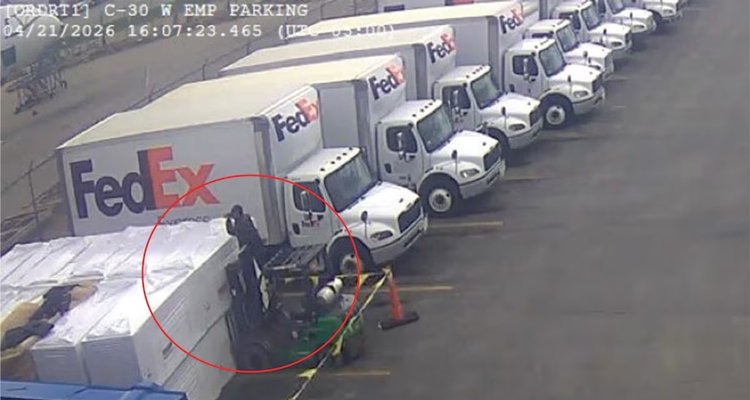
A criminal complaint filed in the Eastern District of Michigan alleges that in April, Zeng took photographs of the FedEx facility, climbed on a parked forklift and attempted to open locked trailers. The Justice Department says surveillance footage shows Zeng attempting to open a shipping container and using the forklift to take photos at a higher vantage point.
After leaving the country, Zeng attempted to reenter the U.S. on Aug. 23 through Detroit’s Ambassador Bridge, which links Canada and Michigan, and was flagged for additional screening based on the April incident. He was then interviewed three subsequent times by Customs and Border Protection agents.
In his third interview, Zeng stated that a Chinese contact assigned him specific planes and tail numbers to photograph and that he would be paid between $20 and $30 per photo, according to the criminal complaint. Zeng said that he talked to the contact using SIM cards that were sent to him by mail, and after talking, he would destroy the SIM cards, delete the conversations and delete the photos that he had taken.
He allegedly told customs officers that the contact approached him on an “aviation spotter website” and said he believed the person was connected to the Chinese Communist Party, and was told that the photos were going to be used for “research.”
He also supposedly thought it was “cool” to be working with someone who was sort of like an FBI agent.
That Zeng lied at first doesn’t mean much given the fact that after further questioning he told the truth, though perhaps not all of it. If he did suspect that his employer was a member of the Chinese Communist Party, one has to wonder about the motives being reported: “coolness” factor plus a few bucks per pic.
Kids, no, it is not cool to help the CCP spy on us.
Also see:
Court Listener: United States v. Zeng, Indictment