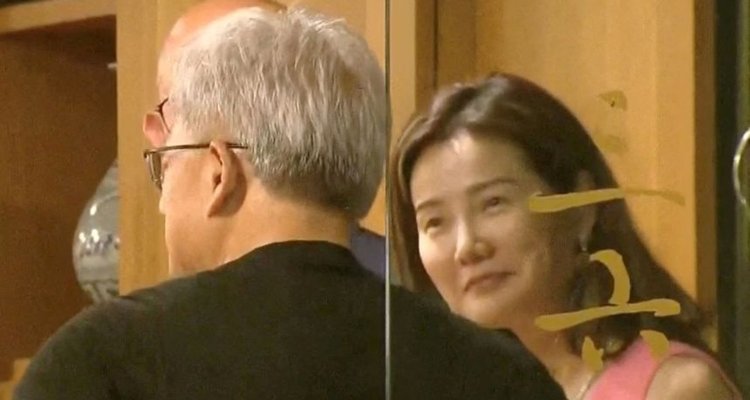
ROC Minister of the Interior Liu Shyh-fang says that Alice Huang, also known as Huang Le, is now unwelcome in Taiwan. Taipei has revoked her entry permit.
Huang is in the news for having an affair with former Nvidia CEO Jensen Huang (no relation) and for securing high-end Nvidia chips for a Singaporean company that apparently ended up in mainland China, evading U.S. export controls. U.S. intelligence agencies have concluded that she has been working on behalf of PRC intelligence agencies.
That she had ever been allowed to enter the Republic of China has caused some lawmakers, like Democratic Progressive Party Legislator Huang Jie, to urge better visa oversight (Taipei Times, November 12, 2026).
Citing [Alice Huang’s] documented visits in June 2024 and May last year, Huang Jie questioned what kind of vetting she underwent to be able to enter Taiwan so freely on a business visa.
She asked how many Chinese enter on business visas annually, urging the government to strengthen inter-ministerial screening to prevent similar risks….
The police and immigration systems would provide their full assistance under Taiwan’s legal framework, as protecting the nation is the top priority, Liu said.
Chinese submitted about 410,000 entry and residency applications in the first nine months of this year, including more than 60,000 business visas, the NIA [National Immigration Agency] reported.
Minister Liu says that if the Republic of China had known that Alice Huang was a spy, “we certainly would not have let her enter Taiwan.”
Reducing risk
The question is how to reduce the risk of letting a spy or other troublemaker into the country when there’s no way of knowing whether an applicant has engaged in or has agreed to engage in adversarial activities. What Taipei does know for sure is that Beijing is unremittingly hostile to the Republic of China and that citizens of the People’s Republic are required by law to cooperate with its intelligence services when asked to do so.
According to the ROC Ministry of Transportation and Communications, in just one month, September 2026, “611,755 visitors arrived in the Republic of China.” These included “117,857 Overseas Chinese,” i.e., Chinese who are not ROC nationals. Many of these overseas Chinese were visitors from mainland China, Hong Kong, and Macao. (The totals include repeat visitors.) Some unknown percentage of these visitors are saboteurs or spies on missions for the Chinese Communist Party.
If all these visitors are not to be cut off entirely, part of the solution may consist of updating how the applications of Hong Kong passport holders are treated. Alice Huang used such a passport.
Taipei Times notes that “It is generally simpler for Hong Kong passport holders to enter Taiwan than those with mainland Chinese passports, who must apply for special permission to travel here.” The distinction originated in perceptions of relative risk. The assumption that entrants coming from Hong Kong are lower-risk than those coming from the mainland is no longer tenable, however.
The ROC government is currently thinking about tightening entry checks on two Hong Kong groups, “those with triad links or criminal records, and people born on the mainland who later obtained Hong Kong status.” But, says Mainland Affairs Council deputy minister Shen Yu-chung, the government will not start to treat Hong Kong as if it were the mainland.
Also see:
Taipei Times: “CCP steps up infiltration efforts: NSB” (October 21, 2026)