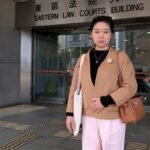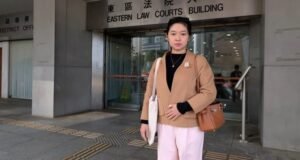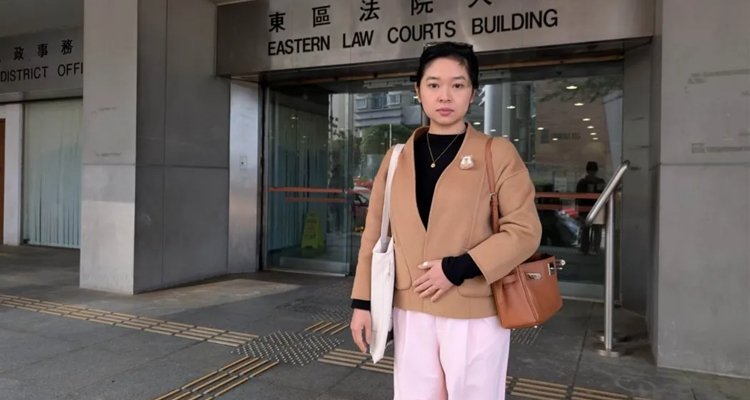
A Hong Kong court has found the Wall Street Journal guilty of trying in 2024 to deter one of its Hong Kong reporters, Selina Cheng, from participating in the Hong Kong Journalist Association. But it acquitted the Journal of a second charge of “dismissing or discriminating against an employee because she exercised those rights,” since The Wall Street Journal had indeed been restructuring when Cheng was let go (The Guardian, September 10, 2026).
Cheng, who covered China’s automobiles and energy sectors for the WSJ, said her editor had told her that employees should not be seen as advocating for press freedom in “places like Hong Kong”, saying it could be perceived as a conflict of interest. She alleged her employer had attempted to prevent her from taking up a role in the union.
She said the company told her that she needed to seek the firm’s approval for outside activities and requested her to leave her then-board position at the association.
Cheng launched the private prosecution against Dow Jones Publishing after losing her job in July 2024, weeks after taking up the position as chair of the union.
The company pleaded not guilty to both charges, which each carry a maximum fine of HK$100,000 (about $12,750).
Sentencing is expected to be handed down at a later date.
The case is odd in light of the fact that the arch enemy of press freedom in Hong Kong is the CCP government, not skittish foreign newspapers. Yet a part of this government, the court deciding Chen’s case, professes to affirm her right to work for a Hong Kong union that defends press freedom. It does so, however, solely on the basis of a statutory right to participate in a registered trade union.
Hongkongers are still, sort of, allowed to join trade unions. But these unions are now more strictly regulated and more readily either prevented from forming or forced to close than they were before the Chinese Communist Party imposed the National Security Law of 2020 on Hong Kong. As early as 2021, Human Rights Watch was reporting that “China Is Dismantling Hong Kong’s Unions.” The government has pressured the Hong Kong Journalists Association, which is much less active than it used to be, but has not yet forced the Association to shut down.
Perhaps the Party has regarded the Cheng case and any potential verdict as no threat to its ability to censor and punish any expression that it finds objectionable.
If so, its conclusion seems warranted by another recent verdict. A Hong Kong court just sentenced two “Tiananmen vigil group leaders,” Lee Cheuk-yan and Chow Hang-tung, to 7 years in prison.