Or perhaps the aid deal is now a trade deal. The decision to refrain from sending the aid package at least right now was made this past summer, according to the Washington Post. The Post suggests that the president may be motivated by a desire to grease the wheels of negotiation with Beijing and also a desire that the ROC pay for the weapons it gets from the United States (September 19, 2025).
The decision, which may still be reversed, marks a U-turn in U.S. policy toward the self-governing island that China claims as its own territory, said the people, who spoke on the condition of anonymity to discuss internal deliberations.
Two people familiar with the matter said the package was worth more than $400 million and would have been “more lethal” than past rounds of aid to Taiwan, including munitions and autonomous drones.
In a statement, a White House official said the decision on the aid package had not yet been finalized. Taiwan’s unofficial embassy in Washington declined to comment.
The Post says that Trump has of late “broadly tempered [diluted] U.S. competition with China,” e.g., by repeatedly deferring a shutdown of the TikTok app in the United States in hopes of securing a sale to U.S. buyers and by softening export controls on sophisticated microchips. Moreover, the president has “promised a more transactional U.S. foreign policy and does not support sending weapons without payment, a preference also on display with Ukraine.”
Weapons sales were the subject of a recent meeting of mid-level U.S. and ROC officials in Alaska.
In a meeting between U.S. and Taiwanese defense officials in Anchorage last month, the sides agreed to a massive package of weapons sales, four people familiar with the talks said. Taiwan plans to pay for the new round of arms, which could total in the billions of dollars, by passing a supplemental defense spending bill now under debate in its legislature.
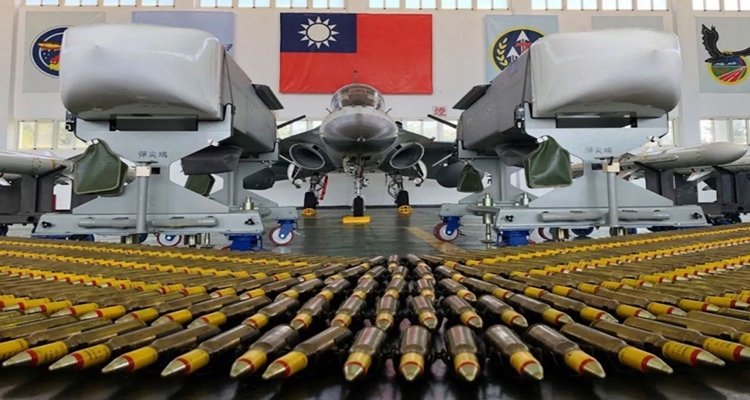
The package would consist almost solely of “asymmetric” equipment, such as drones, missiles and sensors to monitor the island’s coastline, the people said. Still, these next-generation weapons may take years to deliver. Taipei is already waiting on billions of dollars’ worth of weapons—including F-16 fighter jets and Harpoon anti-ship missiles.
The Trump administration has “informally alerted” Congress that the U.S. may soon sell $500 million in arms to the Republic of China. That’s according to a congressional aide “who spoke on the condition of anonymity to discuss sensitive matters and declined to specify the equipment being purchased.”
If this is true—that the ROC is in process of getting hundreds of millions of dollars, perhaps billions of dollars of weapons that it buys from the United States instead of simply receives from it—the new approach doesn’t sound so much like a U-turn in U.S. policy as a modification. The ROC still gets the weapons.