If you live in Taiwan, on August 10, 2026 you woke up to front-page news that includes stories about the wildfires in Canada and the war in Ukraine.
Other home-page reports in the day’s online edition of Taipei Times discuss military drills, the scale of the Republic of China’s defense spending, the indictment of a former soldier in an espionage case involving the People’s Republic of China, the linking of leaked personal data to PRC intelligence, how Taipei was treated at a Nagasaki memorial, and a South Korean chip company’s plans for a facility based in Chongqing.
A sidebar on the top five Most Popular stories includes three on Typhoon Dolphin, a story about new PRC exit regulations, and a story about what Japan’s new defense report has to say about China and Taiwan.
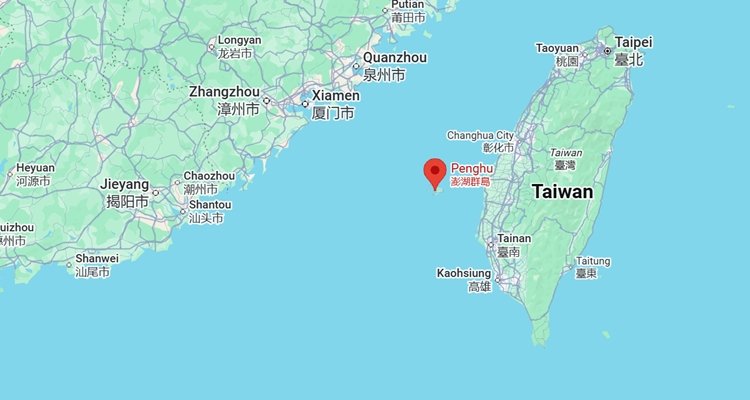
Drills. The Republic of China military simulated repelling an assault on Penghu County, which subsumes many islands lying between the island of Taiwan and the mainland. The ROC also planned to throttle mobile Internet in parts of Taiwan for half an hour; people living in other parts of Taiwan will be subjected to the same inconvenience on Thursday. In all, about three quarters of Taiwan residents will experience the throttling, which affects only mobile Internet, not also voice calls and texting.
Defense spending. The cabinet is expected to approve next year’s budget on August 20, “with defense spending topping NT$1.1 trillion (US$34.07 billion) and NT$240 billion earmarked for a special budget, sources said yesterday…. This year’s defense budget stands at NT$949.5 billion. The Executive Yuan’s original special defense procurement bill proposed NT$1.25 trillion over eight years, but the amount was cut by the opposition parties to NT$780 billion, so this year’s defense spending is unlikely to reach the 3 percent target [3 percent of gross domestic product], sources said.”
Espionage. The news anchor case: A prosecutor’s office recently “indicted a retired military serviceman surnamed Hsu for allegedly handing national secrets to former CTi News anchor Lin Chen-you, who was previously indicted along with six other military personnel on espionage charges.” Lin is accused of “bribing military personnel to leak classified information.” He conveyed the stolen secrets to various “overseas hostile groups,” including one identified only as “PPRIT,” not spelled out or further identified in the present story. But a January 2026 report noted that Lin was being detained for “allegedly funneling money from China” to military personnel in exchange for military information.
The personal data case: “Taipei prosecutors have traced a Chinese intelligence network while investigating Huang Po-wei and Wang Ta-wei over alleged Chinese espionage, including the exposure of personal information belonging to a retired navy sergeant who has publicly opposed the Chinese Communist Party…. Investigators have now found that this personal information leak intersects with a Chinese intelligence network.”
A report published a few days earlier states the finding of the Taipei prosecutors’ office that Huang and Wang “obtained more than 40 million items of Taiwanese labor insurance and health insurance data, as well as household registration records, from the dark web.”
How many of these records have ended up in the hands of the PRC government, if known, does not seem to have been reported. But “Huang Po-wei allegedly has close ties to a Chinese Communist Party member surnamed Mu, whom he helped to check information linked to Taiwanese entering and exiting China, including flights they took, their residential address and how many children they have.”
Exit rules. Taiwanese visitors to the mainland could face new exit restrictions “as China expands government control under new regulations, an analyst said yesterday…. [Hung Pu-chao] said the regulations’ Article 3 requires travelers to verify their reasons for leaving China and provide documents, information and electronic data; Article 4 lists national security, industrial security and technological security as grounds for restricting exits, and that from Article 7 onward, intermediary services related to overseas study, immigration and visas are also brought under regulatory oversight.”
Hung, who helps lead Tunghai University’s Center for Mainland China and Regional Development Research, “said that for Taiwanese, the biggest impact of the regulations is the increase in unpredictable risks associated with travel to and exchanges with China…. The expansion of administrative discretion and the lack of clear boundaries in many provisions make it difficult for people to determine in advance which actions could trigger intervention by different government agencies, he said.”
Japan. The defense report: A newly released white paper, “Defense of Japan 2026,” discusses the security of the Taiwan Strait “as a major concern, saying China has expanded military activities around Taiwan, used repeated drills to normalize the presence of the Chinese People’s Liberation Army, and strengthened blockade, precision strike, and joint operation capabilities.”
The protest of memorial arrangements: “Taipei yesterday protested the seating arrangement at the Nagasaki atomic bombing memorial ceremony, saying that the Nagasaki City Government’s decision to place its representative outside the diplomatic delegation area slighted Taiwan’s national status and played into Beijing’s efforts to suppress the nation.”
Typhoon Dolphin. Responses to the severe weather have not lacked a cross-strait political component. “China has ordered that, due to the typhoon, ships passing through the Taiwan Strait must heed its traffic control instructions—measures that Taiwan has denounced as ‘ridiculous,’ saying that Beijing has no right to restrict access to international waters.”