An adamant but not very persuasive piece of CCP propaganda—which makes hay out of the UK’s inconsistent policies toward refugees from Hong Kong—is offered by a Hong Kong site called The Standard (August 4, 2026).
One can start and almost stop at the headline: “Blindly struggling Hong Kongers become abandoned pawns; Wu Chi-wai abandons the elderly to flee to the UK but immediately hits a wall.”
The assumptions seem to be that wanting to escape the totalitarian rule of the Chinese Communist Party and live in a freer society is evidence of blindness and that “the elderly” (other adults) properly expect other members of their family to sacrifice their freedom in order to provide care.
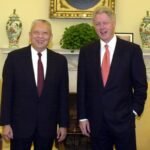
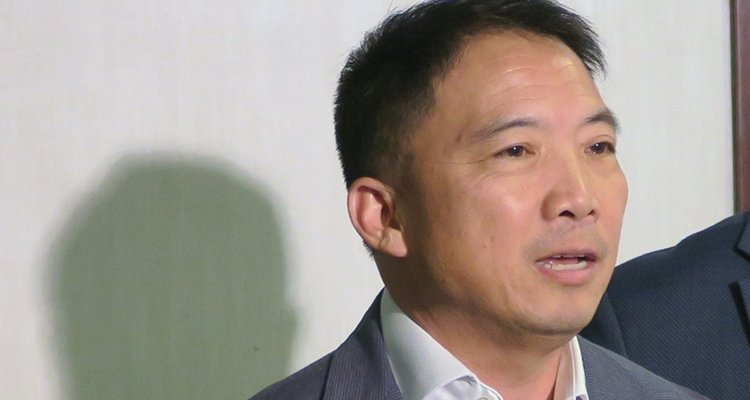
During his detention, Wu Chi-wai [shown above] claimed his visit to the UK was to reunite with his family.
However, it is reported that his wife and son, who settled in the UK four years ago, never returned to Hong Kong to visit him in prison; he also never mentioned his over-100-year-old mother-in-law, who currently still lives in a residential care home in Hong Kong.
On the contrary, Wu was able to stay in the UK only after anti-China organizations and British politicians successively exerted public opinion pressure, leading people in political circles to question his motive for entry and the manipulation of political forces behind it.
The incident has also drawn external attention to the “abandoning the elderly” phenomenon, where some individuals migrating overseas leave their elders behind in Hong Kong, just as Wu Chi-wai and several wanted criminals who fled abroad have abandoned their relatives, ignoring their caregiving responsibilities.
Leaving one’s parents behind is what everybody does who moves out of the house. It’s unfortunate for Wu’s aged mother-in-law that she will not have the company of Wu and his family. But nobody owes anybody the sacrifice of his freedom.
Leaving Hong Kong behind is what every vocally pro-democracy Hongkonger just out of prison does if he doesn’t want to go back to prison.
The babbling about “several wanted criminals” is an allusion to prodemocracy activists now living in relatively free countries like Britain, Canada, and the United States whom the Hong Kong government has called criminals.
The author asserts without explanation that Wu and his family have been estranged rather than just forcibly separated. The proof is supposed to be that they never returned to Hong Kong to visit him.
The author seems to have missed this detail provided by Associated Press: “After his wife and son moved to the U.K. in 2022, Wu could call them for only 10 minutes once a month. It took about a month for him to send a letter and receive a reply.” Not strong evidence that his wife and son could have easily visited Wu in prison. That they could have easily left Hong Kong again if they had come back to visit is also not obvious.