DeepSeek Artificial Intelligence, maker of the Chinese surveillance-and-propaganda AI model known as DeepSeek, is one of dozens of Chinese firms that the United States has decided not to blacklist for now despite having deemed their products and activities a security risk.
The reason: “Since late 2025, Jeffrey Kessler, under secretary of commerce for industry and security, has sought to avoid listing Chinese parties for fear of escalating tensions between the U.S. and China,” say “people familiar with the matter” (Reuters, June 17, 2026).
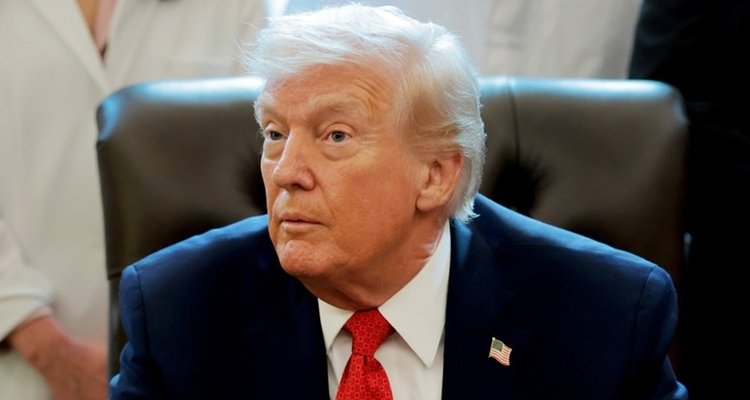
The probability that an under secretary of commerce for industry and security is setting U.S. policy on these matters is zero. But Reuters also refers more generally to the Trump administration’s efforts “to avoid escalating tensions with Beijing.” The Trump administration is led by Donald Trump.
DeepSeek, whose low-cost AI model sent shockwaves through the technology world in January 2025, has supported China’s military and intelligence operations, a senior U.S. State Department official told Reuters last year, adding that the startup tried to use Southeast Asian shell companies to illegally access advanced U.S. chips.
This year, Anthropic said it identified a campaign by DeepSeek and two other Chinese AI labs to illicitly extract capabilities from its Claude AI platform to improve their own models, and OpenAI warned lawmakers that DeepSeek also was targeting its models.
ChangXin Memory Technologies, China’s top memory chipmaker, was designated as a Chinese military company by the Defense Department under the Biden administration. The Commerce Department considered placing it on its Entity List more than a year ago, Reuters and others reported.
U.S. companies cannot ship goods, software and technology to companies on the list without a license, which is likely to be denied….
The U.S. has not posted any additions to its Entity List since October, the longest stretch between new postings in more than a decade, said Philip Luck, who studies global supply chains at the Washington-based Center for Strategic and International Studies.
“The Entity List is like whack-a-mole and you’ve got to keep whacking the moles,” Luck said, referring to an arcade game. The lack of new listings is likely allowing American technology to reach adversaries who could use it against the U.S., he added.
Chinese companies not on the Entity List but which U.S. officials have identified as security risks include other developers of AI models, suppliers of drones to Russia, suppliers of drones and robot dogs to the People’s Liberation Army, sellers of restricted Nvidia chips to Chinese universities, and producers of advanced semiconductors or semiconductor manufacturing equipment.
In the normal course of events, it may take a while for companies that the U.S. identifies as security risks to be formally added to the Entity List. But although a fair number of additions were made during 2025, no new additions to the List have been made since October 2025, more than half a year ago. That’s not just a bureaucracy-as-usual delay.
Also see:
Smartrade: “BIS Adds Over 80 Companies to Entity List, with Heavy Focus on China” (March 26, 2025)
Federal Register: “Additions and Revisions to the Entity List” (September 16, 2025)
Federal Register: “Additions to the Entity List” (October 9, 2025)