As the United States begins a blockade of Iranian ports, President Trump has advised the Chinese government that it had better not send missiles to Iran if it doesn’t want to be walloped with more tariffs (CNBC, April 13, 2026).
“I hear news reports about China giving [Iran] the shoulder missiles…what’s called the shoulder missile, anti-aircraft missile. I doubt they would do that. But if we catch them doing that, they get a 50 percent tariff, which is a staggering amount,” Trump said, in response to a question on whether a previous threat of tariffs on countries found supplying military equipment to Iran would also apply to China.
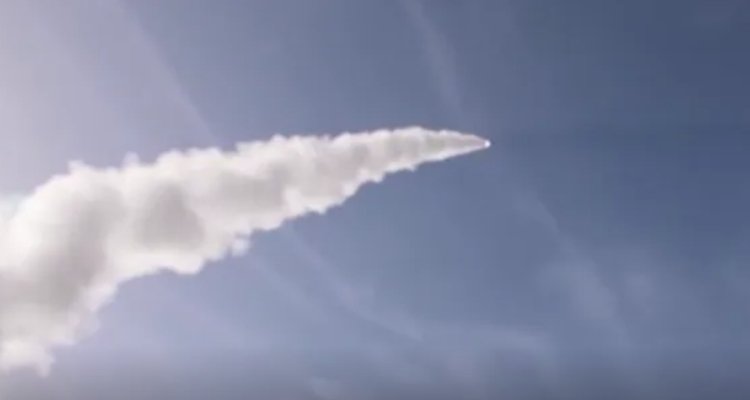
Trump’s comments, made in a televised phone call with Fox News, came as CNN, citing insiders, reported on the same day that U.S. intelligence assessments suggested an impending Chinese shipment of man-portable air defense systems (MANPADS)—a shoulder-operated, surface-to-air missile platform—to Iran.
But the Chinese government, a longtime backer of the Iranian government, has already been doing a lot to help the current Iranian regime during the war.
For public consumption, the People’s Republic is in full give-peace-a-chance mode. In early March, China offered to mediate. On April 8, Iranian officials credited the “diplomatic efforts by Pakistan and a last-minute push by China” for Iran’s agreement to a two-week ceasefire to permit time for meaningless negotiations.
Meanwhile, China has been shipping “enough chemicals to produce hundreds of projectiles” to the Iranian government and providing it with satellite intelligence to assist in its targeting of the U.S. and others in the region.
Be It Sort of Resolved
On April 7, China was one of two powers to veto a bloated and hedging UN Security Council resolution—reportedly watered down over the course of lengthy haggling—to “strongly encourage” states “interested in the use of commercial maritime routes in the Strait of Hormuz to coordinate efforts, defensive in nature, commensurate to the circumstances, to contribute to ensuring the safety and security of navigation across the Strait of Hormuz, including through the escort of merchant and commercial vessels, and to deter attempts to close, obstruct or otherwise interfere with international navigation through the Strait of Hormuz….”
A resolution inviting countries whose ships are being attacked by Iran in the Strait of Hormuz to “Hey, try to do what you can to protect your own ships, within limits, being sure to act only defensively” was regarded as excessive by pro-Iranian-regime China and pro-Iranian-regime Russia, two of five permanent members on the Security Council. Their vetoes of the draft resolution were joined by the abstentions of non-permanent council members Pakistan and Colombia.
Also see:
CNN: US intelligence indicates China is preparing weapons shipment to Iran amid fragile ceasefire (April 11, 2026)