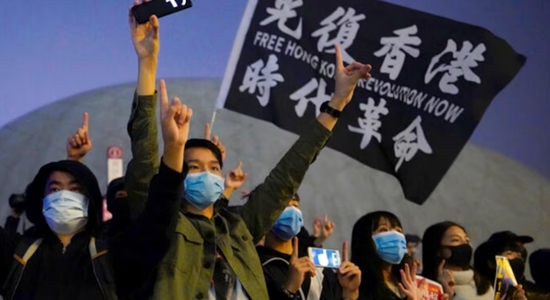
After the massive demonstrations in 2019 against the Chinese Communist Party, Hong Kong police arrested about 10,000 Hongkongers for their participation. Some 6,000 of those who were arrested have not yet been charged.
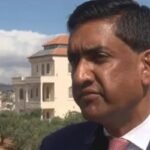
They’re not off the hook. Secretary for Security Chris Tang recently reiterated the familiar stance of Hong Kong authorities that it would be contrary to “the rule of law,” that infinitely elastic “principle” of Chinese totalitarianism, not to prosecute them simply because of the passage of time (“Hong Kong rejects amnesty for thousands arrested for 2019 protests,” Radio Free Asia, October 30, 2024).
The only issue, Tang says, is whether evidence can be found against these not-yet-incarcerated persons, currently obliged to live under a cloud if they are unable or unwilling to leave Hong Kong. It takes time, Tang says, for police officers to review surveillance footage of the protests.
A former participant in the 2019 protests, who gave only the nickname A Jing for fear of reprisals, said he had eventually left Hong Kong after charges against him were dropped….
According to A Jing, many of the 6,000 who have been arrested but not charged are having to decide whether or not to flee based on how harsh they think their eventual sentences could be.
“It really makes sense for someone to flee if they think they could be sentenced to 10 or 20 years, because that would be most of their life gone,” he said. “But some may think they could serve 2 to 3 years, and they may have heard…that emigrating means losing everything that’s important to them and starting over somewhere else.”…
“I’m anxious about everything these days,” a former arrestee who gave only the surname Chan for fear of reprisals told RFA Cantonese. “The lawyer told me…that they could just suddenly call me up one day and go ahead with the prosecution.”
All this anxiety about uncertain fates seems excessive to Secretary for Justice Paul Lam, who in late October said that arrestees are “free to live their lives,”—something nobody in China is free to do, some less than others. One thing the arrestees are not free to do without being searched and interrogated is travel.