Taipei says that its military drills are getting more realistic. But that’s not true of the air raid drills. Domino Theory’s reporters dub the drills a “farce” (August 19, 2026).
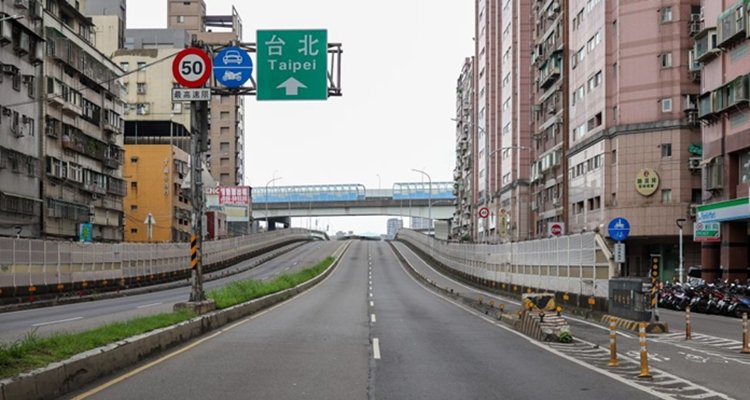
During civilian air raid drills held each year during the annual Han Kuang military exercises, the vast majority of people stay above ground, either at their desks or in their homes. If they happen to be outside, they simply stand in any local business or sheltered space that remains open (many businesses pull their shutters down during the drill, as they should).
If you live outside Taiwan, even if you are a Taiwan specialist, you might not be aware of this, because every year after the drill both Taiwanese and international media publish photos of people crouched in shelters in the braced position, and government officials will say how Taiwan is taking things more seriously and people really did go into the shelters this year.
But everyone in Taiwan knows this is not true. They know it because they are not doing it.
How do the Domino Theory reporters know? Last year and this year, they visited shelters other than the ones that the government invited journalists to go to. “This year, we visited 60 shelters in Taipei during the air raid drill on August 13. We also visited several shelters in Taichung during the air raid drill in that city on August 10.”
Unnoticed problems
If more people would go to the shelters during drills, they would complain about the conditions “and the feasibility of having dozens or hundreds of people confined in them for 30 minutes for a drill, let alone hours for the real thing.
“The basements are dusty. The parking garages are hot. Mostly these spaces seem poorly ventilated. The shelters overwhelmingly lack drinking water or prepositioned food supplies. They don’t have medical supplies, or camp beds and blankets. These shelters are no more and no less than existing underground spaces. Taiwan has not prepared them in any meaningful way.”
The problem has also been observed by the Global Taiwan Institute, which concluded last August that “Taiwan’s civil defense efforts remain in their infancy. For the most part, civilians are instructed to wait in shelters until the simulated strikes are over. In some instances during the exercises, this instruction was not provided, with shelters occasionally unavailable, aged, or in poor working order…. Should a contingency expand beyond a few days of missile strikes, these civil defense measures would be wildly insufficient.”
Domino Theory says that GTI understates the case. Last year, too, “In only some instances during the exercise did civilians wait in shelters.”
GTI says that Taiwanese citizens must be more than passive participants during civil defense drills. Domino Theory says that most are not even participating.
Also see:
Global Taiwan Institute: “Taiwan’s Path to Whole of Society Resilience”