The United States must build stronger alliances, alliances that allow us to not be the world’s only policeman. We need stand-up allies. One of these may be Japan.
Many Americans protest our government’s job as world policeman. Yet here we are, where we’ve been for decades…saddled with commitments to militarily defend 67 countries.
World War III?
What with the new Iran War, Israel’s actions in Lebanon, and the ongoing Ukraine War—not to mention continued Yemeni attacks on Red Sea shipping and bloody conflicts raging throughout Africa—it almost seems as if World War III has started unannounced.
And all this before we even consider Asia, where, as The Economist puts it, “China has been bullying America’s allies.” China’s increasing harassment of and threats to invade Taiwan, its claim to 90 percent of the entire South China Sea, its regular attacks on Philippine and Vietnamese fishermen, its deadly clashes with India, and its less than peaceful behavior toward Australia and Japan—have put the entire region on edge.
For all my six decades, the United States has been the dominant military power in the world. Yet with China’s massive military buildup, U.S. dominance is now an open question in Asia. Failure to help Taiwan defeat a Chinese attack would destroy U.S. credibility there…and likely far beyond.
So how can we ever relinquish the badge of world’s policeman?
The United States has been the indispensable nation leading the free world. But this does not mean that we can go it alone against authoritarians around the globe. We need strong allies so we don’t have to.
We know that the prospect of a NATO-type alliance in Asia scares the daylights out of the Chinese Communist Party. Surely this kind of alliance would serve as a much stronger deterrent than just a single world policeman. And maybe we’re beginning to see it.
Japan: back?
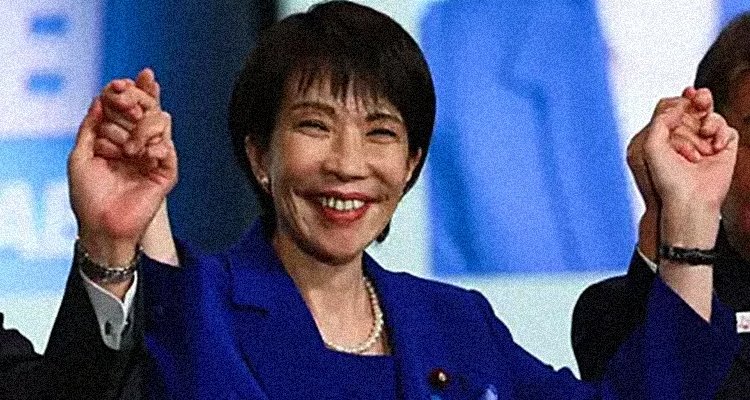
Last year, Japan’s first female prime minister, Sanae Takaichi, put the world on notice that a Chinese attack on Taiwan would constitute a threat to Japan to which Japan could respond militarily. In response, a Chinese diplomat suggested cutting off her head.
Takaichi is still around and capitated, having just recently met with Philippine President Ferdinand Marcos to announce that the two countries are elevating their relationship to one of Comprehensive Strategic Partners. As former senior DOD official Tony Hu explains, Japan is “helping friends beef up their self-defense capability, which further enhances the deterrence that China is facing.”
Last month, what has for decades been referred to as “pacifist” Japan lifted its post-World War II ban on exporting military weapons. Japan is re-arming both itself and its allies.
“In an increasingly severe security environment,” says Prime Minister Takaichi, “no single country can now protect its own peace and security alone, and partner countries that support each other in terms of defense equipment are necessary.”
The Chinese Communist Party is unhappy about this, preferring its victims prone.
“Japan’s recent series of dangerous moves in the military and security fields have exposed its self-proclaimed status as a peaceful nation,” says China’s Ministry of Foreign Affairs spokesperson. “Japan is restarting its war machine and exploring war abroad.”
Funny. No other countries are expressing fear of Japan. They are all scared of China.
“Japan is back!” Takaichi said last year at the White House.
Glad to hear it. The world needs you.
This is Common Sense. I’m Paul Jacob.
Based on articles published May 27, 2026 and May 29, 2026 at ThisIsCommonSense.org