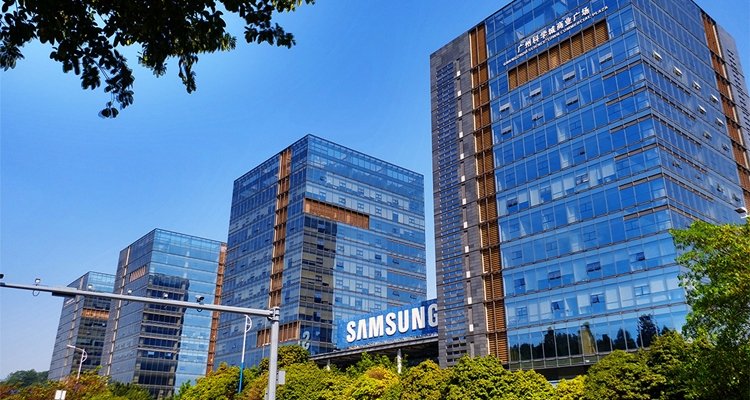
South Korean microchip manufacturers operating within the People’s Republic of China will soon need to secure short-term licenses from the United States in order to use American tech when making chips “for China Use” (“Samsung, SK Hynix Lose US Waiver on Chip Gear for China Use,” Bloomberg, August 29, 2025).
The Trump administration will revoke waivers for Samsung Electronics Co. and SK Hynix Inc. to use US technologies in their Chinese operations.
The move would revise the validated end user rules, handicapping the ability to make chips in China and jeopardizing Beijing’s access to certain technologies.
The companies have 120 days until the waiver expires, and can seek licenses to continue operations, according to an announcement in the US Federal Register.
If the short-term licenses would be always granted, the necessity of applying for them would do nothing to curb the flow of high-end microchips to the PRC. But it looks like some of the necessary licenses won’t be granted.
The waivers [being rescinded] date back to 2023 when then-President Joe Biden’s administration moved to allow the South Korean chipmakers to acquire the equipment they need to sustain and expand their giant operations in China. Washington had effectively granted an indefinite waiver on broader restrictions banning the shipment of advanced chipmaking gear to the country….
In a statement announcing the decision [to rescind the waiver], the Commerce Department said that it has no intention of granting licenses that would allow companies to “expand capacity or upgrade technology” at manufacturing facilities in China. The agency indicated that the move was intended to end a break that it saw as aiding foreign producers without any similar benefit for American manufacturers.
“The Trump administration is committed to closing export control loopholes—particularly those that put US companies at a competitive disadvantage,” Under Secretary of Commerce Jeffrey Kessler, who oversees export control programs, said in the statement. “Today’s decision is an important step towards fulfilling this commitment.”
This may be the right policy for what sounds like the wrong reason.
A desire to reduce the amount of advanced technology that the CCP is getting from South Korean companies with the help of American technology is a good reason. A desire to crack down on foreign firms in order to redress an alleged competitive disadvantage suffered by American firms (competitive disadvantage in equipping the People’s Republic of China with advanced microchips?) is not a good reason.
Chris Miller, author of Chip War, says that if the new U.S. policy “isn’t accompanied by further steps against [Chinese chipmakers like] YMTC and CXMT, it risks opening market space for Chinese firms at the expense of the Korean firms.”
The new U.S. policy may not go far enough in other respects. Reuters: “The Commerce Department said in a statement that the United States plans to grant license applications to allow the companies to operate their existing facilities in China, but does not intend to grant licenses to expand capacity or upgrade technology.”
Why is it okay to use American technology in existing facilities that provide the PRC with powerful microchips? Does this not also serve to provide the PRC with powerful microchips? The more thoroughly Beijing’s access can be jeopardized, the better.