It’s tricky, suggests Simon Tang. The People’s Republic of China would prefer to avoid a long-drawn-out, destructive war with the Republic of China. But PRC leaders might try “limited coercion” in expectation of quick victory if they conclude that the Taiwanese “lack the political will to resist.” And then might feel obliged to prosecute a long and ruinous war if this calculation proves incorrect (Taipei Times, October 12, 2026).
Former chief of the general staff admiral Lee Hsi-ming identified this problem. Taiwan’s willingness to fight is difficult to quantify, but persistent domestic attacks on the country’s willingness to resist could create a dangerous impression in Beijing: Taiwan does not want to fight and might collapse once serious pressure is applied….
Deterrence depends not only on military capability and resolve, but also on an adversary’s perception of them.
Taiwan might possess anti-ship missiles, drones, mines, air defenses and favorable geography, but if China believes Taiwanese society would fracture after several days of a blockade, cyberattacks or military pressure, it could discount those advantages.
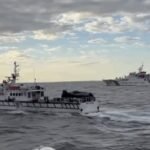
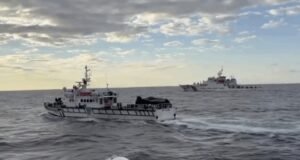
Large military exercises become a partial blockade. Cyberattacks disrupt communications and financial networks. Economic pressure intensifies. Perhaps China conducts limited strikes while presenting Taipei with political demands.
What if Taiwan refuses?
Beijing would face a choice: Retreat and accept the political consequences of failed coercion, or escalate. A blockade could become strikes; strikes could provoke retaliation; further escalation could draw in the US and Japan. A strategy intended to avoid war could produce one.
Moral of the story: don’t assume either that “China will definitely attack” or that “China will never attack.” What the PRC will do largely depends on whether it “convinces itself that Taiwan will surrender before a real war is necessary—and discovers too late that it was wrong.”
This line of argument suggests that those in Taiwan working overtime to appease Beijing and convince other Taiwanese to do the same, as if this were the key to avoiding war, are altogether on the wrong track. The current leader of the Kuomintang (shown above) comes to mind.
Also see:
Taiwan Insight: “Cheng Li-Wun’s China Illusion” (May 30, 2026)
“The cornerstone of Cheng Li-wun’s approach remains the ‘1992 Consensus.’ Traditionally, this has meant ‘one China with respective interpretations,’ a formula long central to the KMT’s China policy. Yet during her recent visit to the mainland, Cheng did not use that wording at all. Instead, she repeatedly adopted the formula ‘1992 Consensus, opposing Taiwan independence,’ language closely mirroring Xi Jinping’s own formulation.”
South China Morning Post: “Taiwan’s Cheng Li-wun on cross-strait peace, meeting Xi Jinping and managing ties with US” (May 11, 2026)
“To be honest, achieving peace and stability across the strait is not nearly as difficult as many imagine…. However, if a government—like the DPP since taking power—blindly follows the ‘two-state theory’….”