First it was on, then it was off. Fenggang Yang was scheduled to deliver a keynote address at a U.S.-China Catholic Association conference held July 31 to August 2 this year at the University of St. Thomas in Houston. Then his address was cancelled.
He says that the chairman of the USCCA board, Peter Tan, was asked to do so by a couple of Chinese Communist Party officials.
The deal
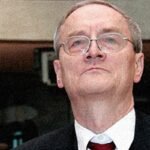
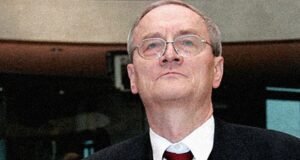
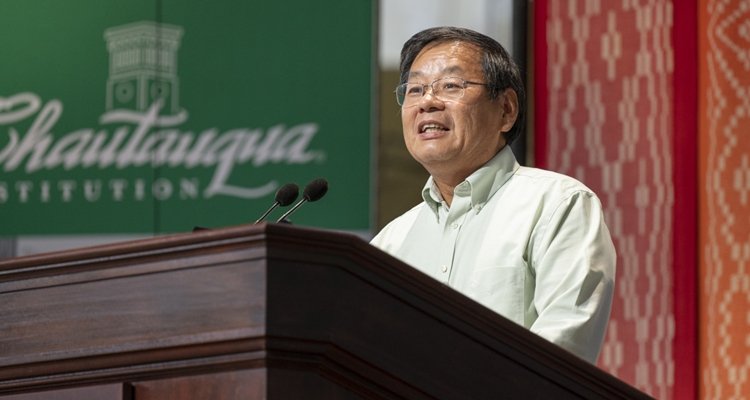
Yang (shown above), who teaches at Purdue University, “has been critical of both the Chinese Communist Party’s persecution of Christians and the secret 2018 Vatican-China deal” about appointing bishops to the CCP-regulated Catholic Church.
LifeSite News observes that under the apparent terms of this agreement, the Pope “retains veto power, though in practice it is the CCP that has control. It also allegedly allows the removal of legitimate bishops and their replacement with CCP-approved bishops.”
Yang told LifeSite that “after accepting the invitation to speak at the conference in September 2025, he received an email from USCCA board chair Peter Tan in May saying that he was confronted about Yang’s participation in the conference by two unnamed Chinese government officials” (July 31, 2026).
Yang said that two weeks later, he was removed as a conference speaker without advance notice….
In addition to its abrupt removal of Yang from the conference, a source known to LifeSite alleged that the USCCA Board under Tan also removed its only member who opposed sinicization and was sympathetic to Cardinal Joseph Zen, persecuted Chinese Catholic businessman Jimmy Lai, and the entire underground Church….
[In a meeting with Peter Tan on Zoom, Yang had] questioned why Chinese officials apparently “have the authority to require a U.S. organization to remove a speaker from its conference program for unspecified reasons.” He noted that “this is an egregious violation of both religious freedom and academic freedom in the United States.”
Yang emphasized that Tan told him that it was likely that the university and the archdiocese would order the cancellation of the conference altogether if he did not withdraw. Yang said that he asked Tan to speak with both and get back to him. He also said that he would ultimately respect the board of directors’ decision if they decided to disinvite him.
However, Tan never confirmed whether he had spoken with the archdiocese or the university…and instead just removed Yang’s name from the conference program without informing him.
“This made me wonder: Who is Peter Tan?…
“China’s transnational repression has become quite well known by now. Still, the willing cooperation of the USCCA with China’s transnational repression is disappointing and troubling,” he said. “It is a shame that a U.S.-based Catholic organization has become part of China’s long-arm repression in the United States.”
It sounds as if “Sinicization,” i.e., subjugation of religion to CCP ideology and power, is a problem not only in the People’s Republic of China and Vatican City but also in the United States of America. The baleful effects of the 2018 deal continue to ripple.
Marxification
Maybe “Sinicization” is the wrong word. The same LifeSite report cites China scholar Steven Mosher, who wants us to drop the term in favor of “Marxification.”
“Calling the Party’s policy on religion Sinicization is misleading, especially to Westerners,” Mosher says. “It would be more accurate to call it ‘Marxification.’ We have seen this at play before—in Nazi Germany. Just as Lutheran and Catholic churches in Germany were forced to serve the goals of the Third Reich, so are churches in China forced to foster the worship of the Chinese party-state and its ‘core leader’ Xi Jinping.”