The conclusion: “Since the start of the Iran war, China’s decision to slash crude imports has been a major factor in keeping oil prices from surging. But its lack of product exports in the April to June period is also a factor in keeping fuel prices elevated in Asia. Given the risk of shortages of refined fuels in Asia, perhaps it would be better for the market if China bought more crude but also exported more fuel.”
The author of the piece, Clyde Russell, who covers Asia commodities and energy for Reuters, summarizes China’s current oil situation and how it is affecting other countries (September 6, 2026).
Some of his observations:
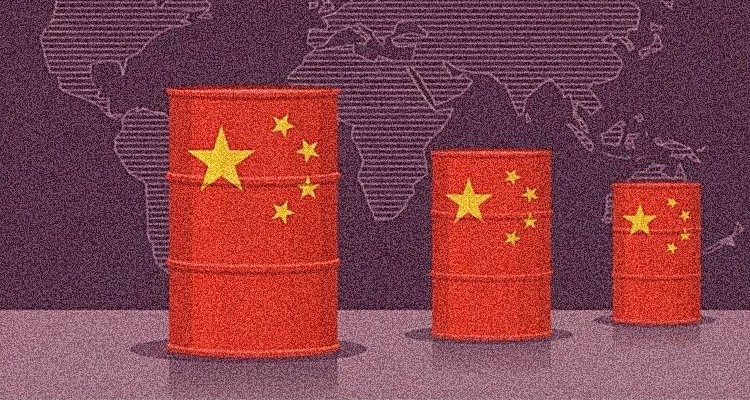
● In August, “China’s seaborne imports of crude oil…remained nearly 40% below” the levels that China was importing before the start of the war on Iran. That’s 7.14 million barrels per day in August, down from the average of 11.41 million during the three months before war started on February 28.
● Asia’s seaborne crude oil imports have dropped by 16%. They were 22.64 million barrels per day in August, 26.93 million barrels per day in the three pre-war months.
● Russell says that the extent to which Beijing has cut its imports of crude oil is “surprising.” Also that some reduction in response to the war-inflicted higher prices for crude was predictable, as “China has a history of cutting imports when prices surge, but boosting them to increase stockpiling when prices slip.”
● China is buying more crude oil from Russia (“another exporter under Western sanctions”) because of the war, but so is India (and presumably others, though to a more modest extent).
● “The increase in August’s shipments of light and middle distillates almost exactly matches the increase in crude imports.”
What increase in crude imports? Russell is referring to the fact that although the August levels of China’s crude imports were 40% below the pre-war levels, the 7.14 million barrels per day imported in August also represented a modest increase of the July average, 6.93 million barrels per day. “While this may just be a coincidence, it does illustrate the wider point that if China does lift product exports, it will probably have to increase crude imports as well.”
The main cause of the higher prices for crude oil is the U.S. blockade of Iran, which even if only partly successful is having a substantial effect. The U.S. should not lift the blockade as long as imposing it deprives the Iranian government of resources and helps the U.S.-Israeli side to win the war. Not even if doing so would make things nicer for the People’s Republic of China and customers of its fuel.
Russell is getting his numbers or most of them from Kpler, a firm that tracks the physical flow of various commodities, including oil.