In December 2024, Reuters reported that both the Financial Conduct Authority of the United Kingdom and the UK’s Independent Anti-Slavery Commissioner were evaluating concerns about the proposed initial public offering of a fast-fashion retailer, Shein, after “an advocacy group for China’s Uyghur population challenged the listing.”
Soon after Shein applied to the FCA for the listing in June 2024, Stop Uyghur Genocide filed a legal challenge, submitting evidence that Shein was using cotton from Xinjiang. “The U.S. and NGOs have long accused China of human rights abuses in the Xinjiang Uyghur Autonomous Region, where they say Uyghurs are forced to work producing cotton and other goods.”
By the time of SUG’s challenge, the U.S. had yet to approve a U.S. IPO for Shein (and it has still not approved an IPO) because of just such concerns, from congressmen and others.
A Singapore-China company
In April 2025, Shein gained the UK regulator’s approval for the London IPO. The FCA approved the London IPO for technical regulatory reasons, not because it had concluded that none of Shein’s clothing was being made by forced labor.
Though now based in Singapore, Shein would also need the okay of China’s regulators for the London IPO, “notably the China Securities Regulatory Commission,” Reuters reported. “Shein does not own or operate any manufacturing facilities, and instead sources its products from around 5,800 [later, around 7,500] third-party contract manufacturers mainly in China, subjecting it to the CSRC’s listing rules.” Shein had been founded in China but relocated its headquarters to Singapore in 2022.
It seems that starting your company in the People’s Republic of China is like being in the mafia. You can never really leave. (See also: Manus.)
In any case, Shein never did secure the approval of China’s regulators for the London IPO, and there would be no London IPO. The Financial Times reported that “Shein failed to receive CSRC approval for its planned London listing after the regulator disagreed with the wording in its risk disclosures related to its supply chain exposure to Xinjiang, a region where China has been accused of human rights abuses against the indigenous Uyghur population.”
The wording that satisfied London dissatisfied Beijing, which denies that there is any slave labor in Xinjiang or elsewhere in China. Shein did, however, secure the approval of China’s regulators for a Hong Kong IPO; the CSRC signed off in July 2026.
Public trading of shares on the Hong Kong Stock Exchange will begin on September 1, 2026.
Enter John Moolenaar
This is where an August 25, 2026 press release from the House Select Committee on the Chinese Communist Party, quoting its chairman Congressman John Moolenaar, comes in. Moolenaar objects to the involvement of American banks in Shein’s Hong Kong IPO.
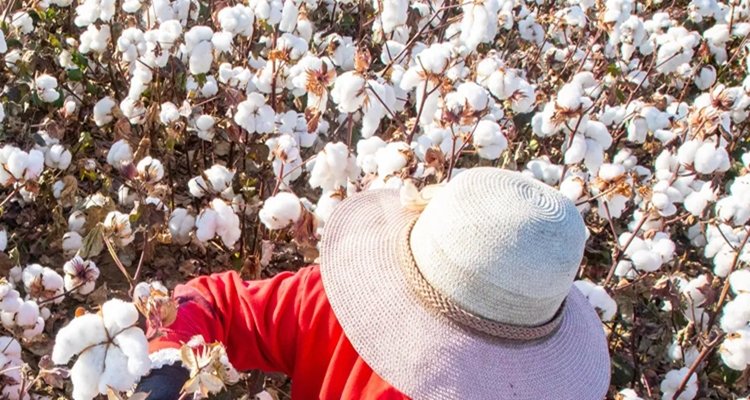
“For major U.S. banks [JP Morgan, Goldman Sachs, and Morgan Stanley] to bankroll Shein’s IPO shows these institutions have no regard for human rights or the victims of forced labor who will be forced to pick cotton for Shein’s clothes,” he says.
“These American banks are being used as a tool by the CCP to bolster their declining economy and capital markets with outside money, enabling a CCP Ponzi scheme [to be imposed] on the rest of the world. It is unconscionable for the American leaders of these institutions to claim they care about U.S. national security and then underwrite a company tied to the CCP and its forced labor and genocide. Enabling the human rights abuses of Shein and the CCP is a stain they will never be able to wash out unless they end their support for this IPO immediately.”
Also see:
Leigh Day: “Stop Uyghur Genocide details supply chain evidence to stop Shein listing on London Stock Exchange” (August 29, 2024)