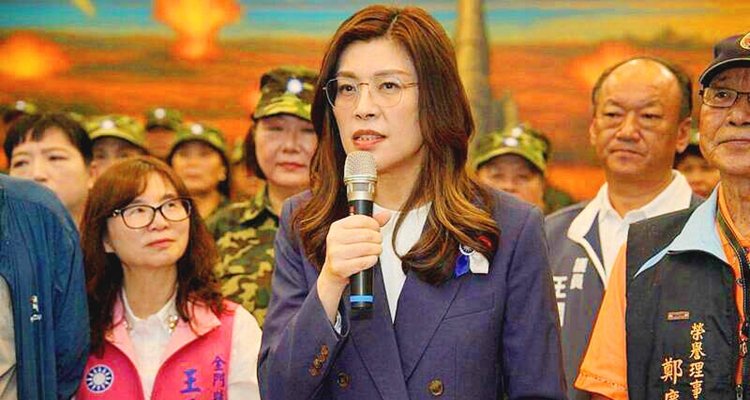
The current leader of the Kuomintang, Chairwoman Cheng Li-wun, wants the president of the Republic of China, Lai Ching-te, to recognize the “1992 consensus.” According to this alleged consensus—which was never set forth in a joint communique or treaty—the People’s Republic of China and the Republic of China each acknowledge that there is only one China, allowing each country to harbor its own private assumptions about what this “one China” consists of (“KMT head touts rapport at 823 memorial,” Taipei Times, August 24, 2026).
The 1992 non-consensus
The CCP has never been meekly silent nor voiced any ambiguity about what it thinks the “one China” is or who governs and properly governs it. Only a quadzillion times has it proclaimed that the Chinese Communist Party is the boss and that Taiwan is going to come under its control somehow or other, sooner or later.
The Democratic Progressive Party has never acknowledged the “1992 consensus,” saying that Beijing does not recognize the ROC and acceptance of the understanding would imply agreement with China’s territorial claim over Taiwan.
Cheng made the remarks during a visit to the 823 Artillery Bombardment Museum in Kinmen to mark the 68th anniversary of the battle.
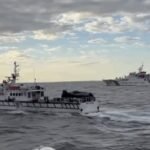
The 823 Artillery Bombardment refers to the engagement that began on Aug. 23, 1958. China launched an offensive, firing more than 470,000 artillery shells in the bombardment of Kinmen over 44 days. Communist forces failed to capture the islands, marking a victory for the Republic of China administration in Taiwan. Soldiers killed during the battle defended the ROC and the values of ROC Constitution, including democracy, freedom, equitable prosperity and the people’s right to live with dignity and affluence, Cheng said.
Commemorating the battle today means continuing to uphold and safeguard the values of the ROC Constitution, she said. This generation is responsible for “creating peace,” she said, saying that the KMT wants to start from Kinmen and pledge a century of peace, transforming the island from a military stronghold into a hub for peace.
If Lai would recognize the “1992 consensus,” the two sides of the Taiwan Strait could resume contact, dialogue and exchanges, reducing tensions, she said.
Cheng’s idea seems to be that Lai’s obedience on this point would perform the magic required to inspire the Chinese Communist Party to stand down, retract its infinite number of military and verbal threats against Taiwan and/or the Republic of China, extend a sincere and lasting olive branch, and henceforth live in peace and harmony with the “compatriots” across the Strait. Or that if Lai’s submission doesn’t accomplish all this at once, it would at least get the ball rolling.
As summarized, her remarks also seem to at least give lip service to values like democracy and freedom, not at the top of the CCP list of priorities.
“Only people who have lost their senses would help the CCP eliminate the ROC and annex Taiwan,” according to an unnamed government official. The question is whether Cheng believes what she is saying—that one or a few KMT-urged humble gestures by Lai will change everything without anybody losing anything, including things like democracy and freedom—or is indeed consciously or half-consciously working to help the mainland annex Taiwan.