The Republic of China’s ruling Democratic Progressive Party has partly succeeded and is partly still stalemated in its legislative efforts to expand military drone production.
The opposition has allowed the regular annual budget to pass, and this regular budget includes NT$63.4 billion (around $2 billion in U.S. dollars) in drone-related spending.
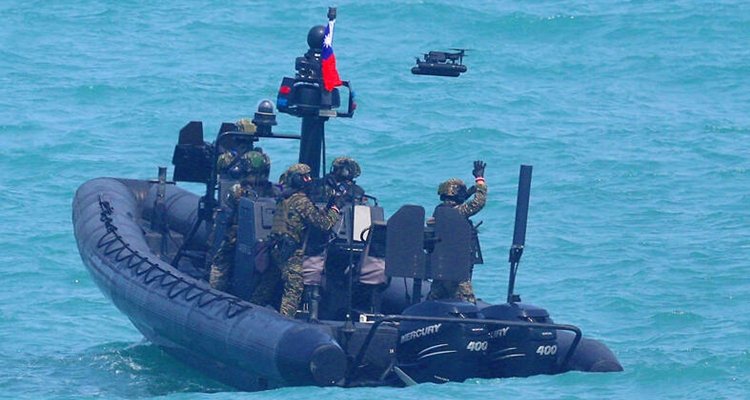
But a special multi-year budget to spend up to NT$210 billion (around $6.6 billion USD) on surveillance drones, coastal attack drones, and uncrewed surface vessels still awaits a full floor vote that won’t come until the lawmakers hash out disagreements. Opposition lawmakers, especially the Kuomintang, prefer more piecemeal, year-by-year approval of the extra spending on drones to a multi-year special budget that does not have to be politically fought over each year (Taipei Times, August 17, 2026).
The Legislative Yuan is slated to hold cross-caucus negotiations on 14 versions of a draft uncrewed vehicle act on Thursday….
The proposed legislation would allocate up to NT$210 billion (US$6.55 billion) from August next year through December 2031 to procure coastal surveillance and reconnaissance drones, coastal attack drones and small uncrewed surface vessels designed for attack missions….
The Legislative Yuan’s Economics, Foreign Affairs and National Defense, and Finance committees on July 27 jointly reviewed the 14 versions of the legislation. After nearly six hours of discussion, lawmakers failed to reach agreement on the bill, including its responsible authority, spending cap and implementation period. The bills passed the committee stage, but must undergo cross-party negotiations before being considered by the full legislature.
The Legislative Yuan on Friday approved NT$63.4 billion in uncrewed vehicle spending, including a six-year NT$44.2 billion industrial development program proposed by the Ministry of Economic Affairs and NT$19.2 billion in drone procurement budgets proposed by government agencies.
Meanwhile, claims attributed to an unnamed source persist that the CCP has been urging “some Taiwanese politicians” to delay, water down, block spending on military drones. These are the kind of accusations that last month had KMT lawmakers suing and threatening to sue Liberty Times, the Chinese-language sister publication of the Taipei Times.
The source said staff units of the Chinese People’s Liberation Army have conducted several wargame simulations of Taiwan’s plans to build up its drone forces in coordination with the US.
Beijing reportedly believes the deployment could significantly undermine the PLA’s strategic advantage in the Taiwan Strait and weaken its strategic deterrence against Japan and the Philippines. The PLA has recommended to the Chinese Central Military Commission that Taiwan’s drone buildup be blocked.
Beijing could accept a version of the legislation focused on “demilitarization,” but wants the budget to be subject to annual, item-by-item review and approval, the source said.
They said blocking the Executive Yuan’s special budget could also pressure the administration of President William Lai to find alternative ways to complete its planned military buildup, giving the Chinese military more time to develop countermeasures.
One might be tempted to downplay anonymous reports that the Chinese Communist Party has been directly pressuring KMT lawmakers and/or “some Taiwanese politicians” to deflect the drones were such reports not entirely consistent with the CCP’s inclinations, history, and propaganda and with the Kuomintang’s latter-day tilt toward the CCP.
The party-state has long opposed efforts to modernize the ROC military. Its United Front Work Department, Taiwan Affairs Office, and state media routinely castigate Taipei’s efforts to improve national defense as provocative and destabilizing. The PRC government would prefer to be in a position to invade unopposed.