The Wall Street Journal gets right to the point: “The Chinese Communist Party targets critics at home and abroad, and it bullies other countries to become accomplices” (August 4, 2026).
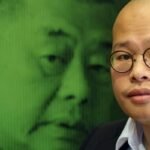
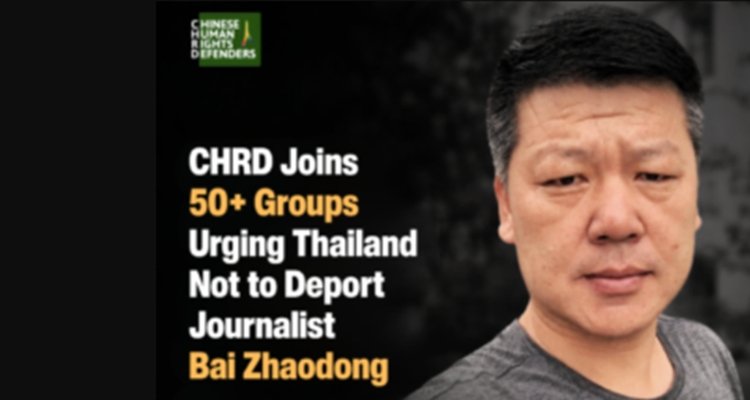
At present, the Party is targeting a Chinese journalist, Bai Zhaodong, who has often reported on political corruption. He is being detained in Thailand, and the Chinese government has requested extradition. Colleagues who wrote for the same publication have already been arrested in China.
Bai Zhaodong covered Covid-19, graft and other politically sensitive topics for Caijing, a Chinese magazine known for investigative reporting. Authorities have detained at least two others who wrote for the publication, and Reporters Without Borders says public security departments across China brought at least five charges against Mr. Bai between 2011 and 2022. Mr. Bai fled the country, arriving in Thailand in 2024.
But Mr. Bai was unable to renew his Chinese passport, and he has been in immigration detention since January 2026….
If Mr. Bai is returned to China, he “will probably be incarcerated based on the articles that he published,” says Ms. Bergman. The United Nations High Commissioner for Refugees has recognized Mr. Bai as a refugee, says the nonprofit Human Rights Watch. Ms. Bergman says another country, which she declined to name, has agreed to take him, but he needs a Thai exit permit. Thailand’s immigration authorities and Ministry for Foreign Affairs didn’t respond to our inquiries.
Many rights groups are paying attention to Bai’s case. The Journal’s editors urge President Trump to raise it with Thailand.
According to Reporters Without Borders, “Bai joined the leading Chinese investigative magazine Caijing in 2014, where he reported on politically sensitive issues, such as the 2015 Tianjin Port explosion, a 2016 bribery case involving a Liaoning official and the COVID-19 pandemic.”
One of his most influential investigations, published in 2017, examined China’s poverty alleviation campaign in Shaanxi Province, revealing the pressure local officials faced from the central government to meet poverty-reduction targets. At the time, Caijing Magazine was able to publish reports that would likely not be permitted today, as Chinese Communist Party Leader Xi Jinping’s crackdown on the press has intensified….
According to a Thai court document seen by RSF, on 30 September 2024, the Public Security Bureau of Yulin City [in China] issued an arrest warrant for Bai on trumped-up charges of “extortion”. At the end of October 2024, Chiang Mai immigration police [in Thailand] were seen twice at the hotel where Bai was staying, looking for the journalist. In January 2026, he was placed in a detention facility pending relocation to a third country, but Thai authorities have barred him from leaving Thailand on scheduled flights twice.
As of this writing, Thailand has yet to turn Bai over. But the Thai government has often complied with CCP demands and won’t let him leave Thailand. If it does comply, it is more likely to do so by simply deporting Bai to China than by conducting formal extradition proceedings that would give him a chance to dispute the Chinese government’s bogus charges against him and to appeal any ruling.
Last year, the Thai government deported 40 Uyghurs to China despite the persecution that awaited them there.