Details of an inspiring months-long mass resistance to mass mulcting in northeastern China are hard to verify. A Vision Times story by Chen Jing seems to be based largely on social-media accounts, some of which are gathered by the Chinese-language Yesterday project.
Chen reports (July 13, 2026):
Storefronts across much of China’s northeastern Heilongjiang province went dark this spring by the owners’ own choice, in a wave of closures that lasted 67 days. Merchants in dozens of counties and cities shut their doors between late April and mid-June….
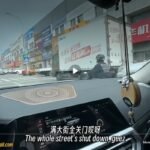
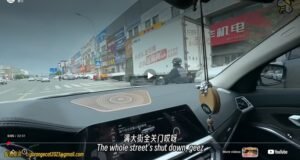
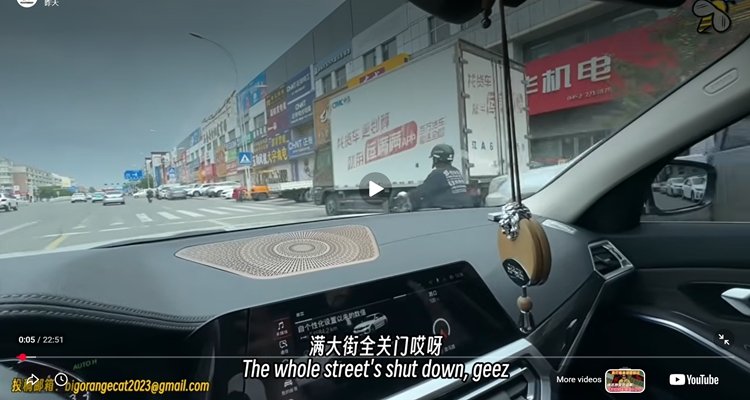
The closures began on April 25 in Qinggang County, under the city of Suihua, then spread to Qiqihar, Daqing, and Heihe. By mid-June the movement had reached 34 counties, cities, and districts across the province. In Qiqihar, Heilongjiang’s second-largest city, nine districts and counties saw nearly all of their commercial streets shut within two days. Photos and videos circulating on Chinese social media showed rows of shuttered storefronts and streets stripped of foot traffic.
No organization coordinated the closures. Word spread merchant to merchant: when inspectors entered one neighborhood, shop owners on nearby streets locked their doors before the inspectors arrived.
Merchants blamed the closures on joint inspection teams combining market regulators, fire safety officers, and health authorities, which they say used minor violations to issue fines that could wipe out a small shop’s entire annual profit….
“If they see an ashtray on a table, they fine you 30,000 yuan. If a trash bin in the kitchen doesn’t have a lid, that’s another 48,000 yuan. People who believed the government’s announcements and reopened their businesses were fined into bankruptcy the very next day. These inspection teams are driving people who are already barely alive straight into the ground.”
Vision Times could not independently verify the specific fine amounts, but similar accounts have circulated widely on Chinese social media in recent months….
When inspectors came, the merchants left. When inspectors left, the merchants came back.
The inspection-based pillaging is a response to lost property revenue and land revenue. To pay the bills, local governments are resorting to what merchants and others call “fine-based revenue.”
Assuming that the reports are accurate—and that the resistance was often successful—one question is why officials desperate for cash would let the store owners get away with it.
“Rumors”
They didn’t, entirely. Authorities tried to “dispel rumors” that these devastating fines were being collected, including by loudspeaker (go to 15:00 in the linked video): “After verification by relevant departments, this information has been confirmed false. We remind all businesses to continue normal operations and not to believe rumors.”
Merchants who accepted such statements at face value quickly paid the price. Others would have heard about this and been less likely to reopen their stores in response to the “debunking” of “false rumors.”
Why didn’t inspectors visit homes or take other steps to force cooperation? Maybe that would have looked too openly like plain looting.
Also see:
Yesterdayprotests.com: “A Million Merchants’ Nonviolent Noncooperation Movement in Heilongjiang” (in Chinese)
Yesterday: Video: “The Plague God Has Arrived: A Nonviolent Non-cooperation Movement of One Million Merchants in Heilongjiang (April-June 2026)”
YouTube seems to auto-dub this video automatically. The video has English subtitles, so you don’t have to listen to the horrific auto-dubbing to understand it. Click the settings (gear icon) and click on “Audio track” to change “Auto-dubbed > English” to “Chinese (traditional) original.”