Senator Rick Scott is a busy man when it comes to proposing bills targeting the Chinese Communist Party.
These range from the STOP CCP Acts of 2022, 2023, and 2025 to legislation to end normal trade relations with China, condemn CCP repression in Hong Kong and sanction culpable officials, and address the vulnerability of U.S. power grid to Internet-connected devices made by Chinese companies and others.
One bill would “prohibit the use of Federal funds and resources for congressional travel to the People’s Republic of China” and takes care to mention that the prohibition does not apply to congressional travel to Taiwan.
Most or all of these anti-CCP bills have not become law. But a few, like bills to counter CCP drones or toughen oversight of Chinese entities, may have influenced other legislation. The U.S. Senate unanimously passed Scott’s resolution to condemn dictator Xi Jinping.
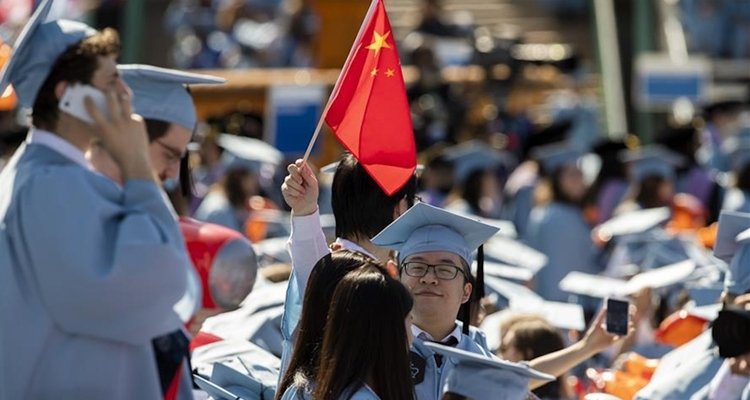
Now Senator Scott has joined Representatives Elise Stefanik and Josh Gottheimer to introduce legislation to prevent American universities “from receiving federal funding if they maintain branch campuses in adversarial countries or accept research funding from foreign governments for sensitive fields such as artificial intelligence, biotechnology, and quantum information science” (Phayul, June 22, 2026).
Under the Defending American Research Act, institutions of higher education seeking federal research and development awards would be required to certify that they do not operate certain branch campuses in designated adversarial countries. The bill amends the Research and Development, Competition, and Innovation Act to establish the certification requirement as a condition for receiving federal research funding.
The No Branch Campuses in Hostile Countries Act would amend the National Defense Authorization Act for Fiscal Year 2021 to prohibit universities from receiving federal research and development awards for a period of five years if they accept funding from specified foreign governments to conduct research related to national security or military applications. The restriction would apply to sensitive fields, including artificial intelligence, biotechnology, and quantum information science.
Supporters of the legislation argue that some academic partnerships and research collaborations have enabled foreign governments, particularly China, to gain access to sensitive technologies, intellectual property, and taxpayer-funded research developed at American institutions.
Scott says: “America has enemies and we need to start acting like it. Countries like Communist China and terror-supporting Qatar should not be able to use America’s colleges and universities as outposts to spy on us, steal sensitive research, and spread anti-American propaganda, but we’ve been letting them do it for years. This legislation is critical to America’s national security and the future of our higher education system, neither of which should be for sale.”
The bills would probably have some salutary effect if enacted. By why not, for example, outright outlaw universities from accepting enemy-government funding for research or collaborating on research that would help enemy governments to strengthen their military? Why not outlaw having branch campuses in the People’s Republic of China?