India has improved its ability to act in the event of another major clash between itself and the People’s Republic of China, with whom it shares a contested border.
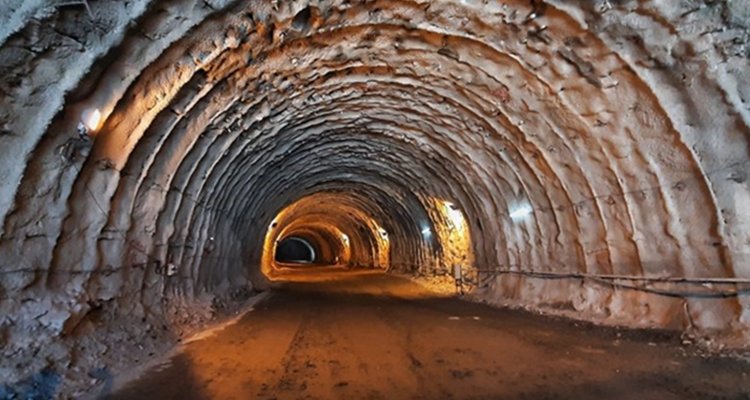
According to India’s Ministry of Road Transport and Highways, construction of a lengthy Kashmir-to-Ladakh tunnel, in the works since 2018, has “progressed steadily” despite “heavy snowfall, harsh weather conditions and complex geological challenges….” Although finishing up will take a couple more years, excavators have done the hard part.
The tunnel means that troops will be able to travel quickly along a route that is more or less impassable much of the year (Asia Sentinel, June 18, 2026).
On June 9, India opened a strategically vital 13.15 km tunnel linking the Kashmir region to Ladakh beneath the 3,529-meter Zojila pass, the world’s longest single-tube bi-directional road tunnel at the world’s highest altitude, providing permanent, all-weather reinforcement of its sovereignty along the Line of Actual Control demarking the border with China, reducing travel time from three hours to 20 minutes. It is designed to allow the Indian Army to rapidly move troops, artillery, and supplies to forward positions without the previous weather-dependent delays….
Built at a cost of US$820–850 million, the tunnel is the first-ever all-weather, year-round connection between the two regions. Historically, the past has been cut off for 160 to 180 days annually by snowfall and temperatures which plunge to -35°C. It is being developed under extremely demanding geological and climatic conditions…. The tunnel is expected to be fully operational by 2028….
“It will be of great importance to the defense forces,” said Iranian engineer Yousef Eshaghpour, who worked for years as a team leader on the Zojila tunnel project. He said this was the most challenging project he has worked on in his career until now. “Through this tunnel, one can reach Ladakh in 15 minutes, and it provides all-weather connectivity between Ladakh and Kashmir. Almost 80 percent of the project is completed.”
Nitin Gadkari, the transportation minister, says that year-round connectivity in the region means that “the movement of the Indian Army, as well as the supply of Army materials, equipment, and logistics, will become faster, safer, and more effective, thereby strengthening the country’s strategic preparedness.”
Prologue?
In the early 60s, conflict between China and India resulted in China’s securing of control of the Aksai Chin region. China also claimed and still claims rights to Arunachal Pradesh, but this region is administered by India.
In 2017, India forcibly stopped Chinese workers from building a road, leading to several weeks of hostilities.
In 2020, Indian Army and People’s Liberation Army border patrols clashed in the Galwan Valley, provoked by Chinese incursions into the de facto Indian side of the border. Because of a longstanding agreement between the two sides prohibiting the use of guns, the India and Chinese soldiers fought each other with sticks and stones and various improvised weapons, but no firearms.
Since late 2024, talks between China and India about the border seem to have kept things quieter. But there is still no final settlement of border questions. According to a May 28, 2026 report in The Hindu, “India and China agreed to continue regular diplomatic and military-level exchanges through existing mechanisms, including those agreed upon during the 24th Special Representatives Talks.” That 24th round of talks occurred in August 2025, and a 25th round is coming up in 2026.
Some argue that the “de-escalation” is a delusion.
Also see:
The Diplomat: “The Zojila Tunnel: A Strategic Lifeline to Ladakh”
Asia Times: “Delusion of de-escalation on the China-India border”
“Aggressive military buildups are still in full effect for both countries along the LAC.”