The scoop is more confirmatory than revelatory. The latest evidence of PLA interest in Nvidia chips is several years of procurement records suggesting that the PLA “has openly tried to acquire restricted U.S. technology” (The New York Times, June 1, 2026).
Chinese records reviewed by Wirescreen, a software platform that provides information about Chinese companies, showed that the People’s Liberation Army has stepped up its efforts to acquire artificial intelligence chips, even after [even after??] the U.S. government restricted semiconductor sales to foreign adversaries including China.
The records document instances when suppliers agreed to deliver those chips under the military’s terms, but they do not document the final delivery. Nevertheless, John Costello, the Wirescreen analyst who wrote the report, said the data showed “directly and irrefutably” that U.S. technology was equipping the Chinese military.
“What number of advanced Nvidia chips in P.L.A. hands does the company consider acceptable?” he asked.
The report draws on a larger pool of data than previously examined and shows how China adapted to and tried to circumvent U.S. technology restrictions in recent years.
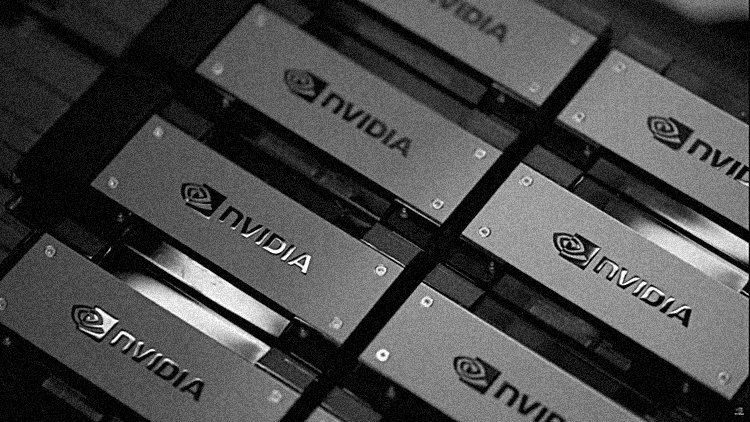
Wirescreen examined 3,800 procurement records related to high-end chips and computing. It discovered more than 500 instances when various units of the Chinese military sought Nvidia chips either by name or technical specification.
Last year, President Trump inexplicably approved the sale to Chinese companies of Nvidia’s second-most-powerful microchip. The Times notes efforts by GOP lawmakers dismayed by such executive decisions to “strip the White House of sole responsibility for A.I. chip exports.” One piece of legislation, the A.I. OVERWATCH Act, “would require the Commerce Department to certify that A.I. chips would not be used to help adversaries’ militaries and would give Congress the power to block chip exports.”
Nobody can “certify” that exported AI chips won’t end up inside an enemy’s computers. Giving Congress the blocking power would be good—that is, if we want the Chinese military to be less than maximally equipped with top U.S. technology. At the same time, the American government needs to do better at thwarting evasion of its export controls.
But too many Quislings within the United States may be in a position to impede such common-sense efforts. One is Nvidia CEO Jensen Huang, who “has said China’s military doesn’t rely on chips from his California-based company.”
Really?
Huang’s assertion is belied by the procurement reports. Also by reports like “Nvidia AI chips worth $1 billion entered China despite US curbs, FT reports” (July 24, 2025), “Chasing the Chip Smuggler” (March 1, 2026), “Taiwan Suspects Nvidia Chips Smuggled to China Via Japan” (May 26, 2026).
U.S. Senator Jim Banks: “China is doing everything it can to weaponize A.I. against the U.S. military. Giving them access to America’s best A.I. chips will only quicken their efforts.”
We should think hard about this. In the event of war between the People’s Republic of China and the United States of America and/or friends of the U.S., would it be good or bad for the U.S. side if the PRC military were as greatly enhanced by cutting-edge U.S. technology as possible?
Also see:
WireScreen: “How the PLA Continued Procuring Nvidia AI Chips After U.S. Export Controls”
“WireScreen analyzed more than 3,800 Chinese military and government procurement records to uncover how the People’s Liberation Army continued acquiring advanced Nvidia AI accelerators—including A100, H100, A800, and H800 GPUs—years after U.S. export controls were imposed.”