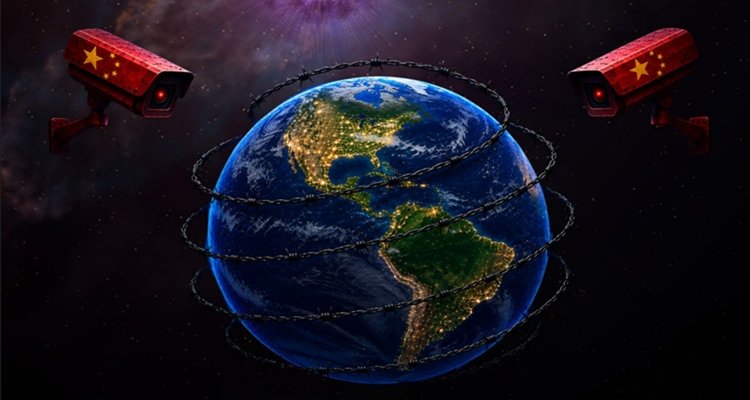
This is the yearbook: The PRC’s Transnational Repression and Malign Influence in 2025, published by the Congressional-Executive Commission on China.
Having tracked the Chinese Communist Party’s campaign to “threaten diaspora communities, pressure critics abroad, undermine human rights institutions, and shape public debate in ways favorable to the CCP” for a decade, the CECC finds that the Party’s efforts have become more aggressive, digital, and global.
The new report looks at eight tactics: “physical violence, AI-enabled sexual harassment, coercion by proxy [threatening family members or other close contacts of a Chinese national living abroad], coercion to return, forced censorship, lawfare, political interference, subverting international organizations.”
Forced censorship
In the category of “forced censorship,” CECC looks at how Sheffield Hallam University—submitting to CCP pressure—censored Professor Laura Murphy’s research on forced labor in the Xinjiang region of China. Then the school reversed course.
After Murphy threatened legal action for violations of academic freedom, the university issued a formal apology to Murphy and allowed her research to continue in October 2025. However, its earlier decision not to publish a report and to return the funding to Global Rights Compliance, a Hague-based non-profit, raised concerns that such actions—seen as censorship on behalf of a foreign government—could undermine freedom of speech and academic freedom protected under the UK’s Higher Education (Freedom of Speech) Act 2023.
Another kind of CCP-appeasing censorship is “censorship of the arts,” as occurred in Thailand.
In Thailand, the Bangkok Arts and Cultural Centre removed artwork three days after the July 2025 opening of the exhibition, “Constellation of Complicity: Visualizing the Global Machinery of Authoritarian Solidarity,” following a visit by Chinese embassy officials in Bangkok who requested the removal of certain content. The censored artwork included a multimedia installation by a Tibetan, while other pieces with the words “Hong Kong,” and “Uyghur” had been altered and redacted. The Centre reportedly acknowledged that the pressure was conveyed through Thailand’s Ministry of Foreign Affairs and the Bangkok Metropolitan Administration, its primary sponsors, stating it had “no choice” but to make the adjustments, including obscuring artists’ identities. The exhibition’s co-curator, Sai—a Myanmar artist—claimed that he left the country after Thai police sought to locate him. He said the incident was a “chilling signal” to exiled artists and activists in the region.
Although the CECC calls this tactic “forced censorship,” the censorship, which of course is itself compulsory, isn’t necessarily the result of compulsion. Neither Thailand’s Ministry of Foreign Affairs nor Sheffield Hallam University seem to have been exactly coerced into doing what they did. They were asked to censor by probably unpleasant CCP agents speaking in belligerent tones. Perhaps the Thai government has reason to regard itself as being compelled. The cost to the university of turning down the CCP’s request would probably have been nothing worse than loss of funding.