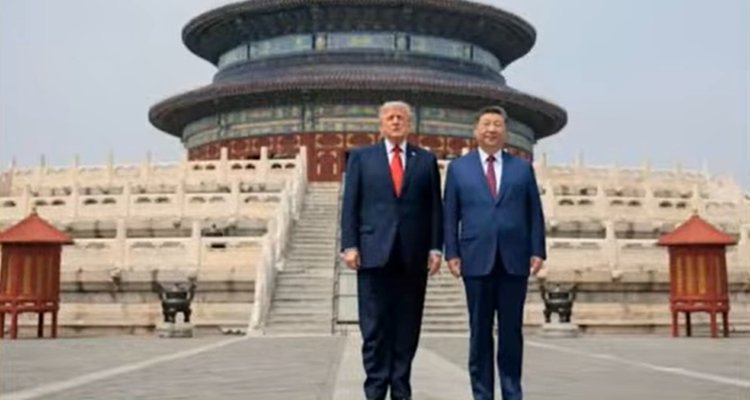
It could have been worse.
The always matter-of-fact and careful Institute for the Study of War reports that although Donald Trump and Xi Jinping “discussed global flashpoints, including Taiwan and the Middle East,” they “did not reach major agreements on these issues” (China & Taiwan Update, May 15, 2026).
No joint communique or joint announcements were issued, just competing readouts. We also witnessed repetition of familiar CCP propaganda and implementation of a CCP plan to convince Americans to catch up on their reading of ancient Greek historians.
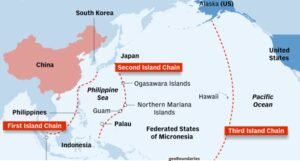
PRC readouts downplayed the issue of Iran…. PRC framing leading up to the meeting emphasized “win-win cooperation” and “peaceful coexistence” between the PRC and the United States. The PRC Embassy in the United States posted a video to X (formerly Twitter) that stated that the Pacific Ocean is vast enough for the United States and the PRC to “prosper in their own ways.” Xi expressed his desire that the United States and PRC become “partners rather than rivals” and avoid the “Thucydides Trap”—a term [referring to] the phenomenon of military confrontation between an established and rising power.
Trump and Xi’s discussions also addressed the conflict in Iran. Trump stated before the meeting that PRC intervention was not necessary to end the war in Iran. Trump later stated that Xi agreed not to supply weapons to Iran and that the PRC “would like to be of help” in ending the conflict and reopening the Strait of Hormuz, however. This is consistent with previous PRC statements on the issue….
Question: Why believe Xi when he “agreed not to supply weapons to Iran”?
According to a May 13 New York Times report, “Chinese companies have been discussing arms sales with Iran, plotting to send the weapons through other countries to mask the origins of the military aid, according to U.S. officials. The United States has gathered intelligence that Chinese companies and Iranian officials have discussed the arms transfers. It is not clear how many, if any, arms have been shipped or to what degree Chinese officials have approved the sales.” Unclear to what degree Chinese officials have approved? The companies are not involved in any such advancing of the CCP agenda without CCP approval.
The PRC’s material support for Iran is not a new development. It has already been sending at least components of arms and helpful tech and information to Iran during the course of the present war.
ISW:
PRC readouts and statements on the summit downplayed discussions on Iran, however. The PRC Ministry of Foreign Affairs (MFA) daily press conference reiterated standard rhetoric on the issue, with MFA spokesperson Guo Jiakun stating that the PRC’s position on the Strait of Hormuz remains “consistent and clear.” The MFA’s readout on Xi and Trump’s meeting used similarly vague language, stating that Xi and Trump “exchanged views” on the Middle East, Ukraine, and the Korean Peninsula without specifying concrete outcomes.
After a fair amount of speculation before the summit about how President Trump might verbally derail U.S. policy on the Republic of China with respect to U.S. arms for Taipei and/or the official diplomatic stance of the United States, neither fear was realized. The summit also has not yet led to any releases of the PRC’s many political prisoners, although Trump may have raised some of the individual cases in his discussions with Xi.
Aside from trying to convince Xi to release prisoners, what was the point of an in-person meeting if various economic agreements could be and will be handled by deputies and be handled remotely? Perhaps Lei was right to suspect, on Lei’s Real Talk, that Trump’s main purpose in going was to assess Xi Jinping and his political situation, which the president must know from intelligence reports and YouTube videos has been shaky for months. For Xi, the meetings with the U.S. president were one way to try to make his political position less shaky.
So no drama on stage. But we did get news about less choreographed, rather dramatic doings a little behind the stage: about antics of the sort that along with other things should again, to all, confirm the nature of the Chinese party-state. Seeking to control how the Trump-Xi encounters were being presented to the world, CCP thugs tried but failed at one point to prevent American reporters from rejoining a Trump motorcade. There was a scuffle and a dash for vehicles by the reporters.
This was just one of several ugly incidents reported by the New York Post. Perhaps minor in the grand scheme of things. But representative.