One report informs us that the office of the U.S. Trade Representative, Jamieson Greer, has opened an investigation of India “and 59 other countries…over what it called their failure to address forced labour in imports” (Times of India, March 13, 2026).
Greer: “These investigations will determine whether foreign governments have taken sufficient steps to prohibit the importation of goods produced with forced labour and how the failure to eradicate these abhorrent practices impacts US workers and businesses.”
The U.S. government is domestic, not foreign. But should it too be investigated by Greer with respect to whether sufficient steps have been taken to prohibit importation of goods made by forced labor?
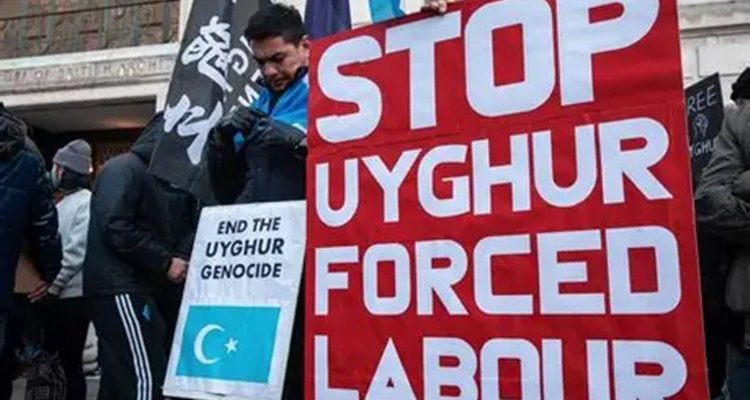
The Wire China is asking whether Donald Trump has “Shelved the Uyghur Forced Labor Law.” The answer is not clear-cut.
Official statistics show that last year Customs and Border Protection, the government agency responsible for monitoring U.S. imports, detained just $178 million worth of goods suspected of being made, in whole or in part, using Uyghur forced labor—87 percent down from 2024, when CBP detained $1.4 billion worth.
Inspection rates appear to be falling too. The CBP stopped an average of 224 shipments per month between April and August of last year, while in the five preceding months, it stopped more than four times that number on average, according to a letter thirteen House Democrats sent to the agency and the DHS in December. The data the House members relied on is no longer available: CBP changed its reporting methodology in January, and replaced the old figures.
The reduction in scrutiny has raised questions about how strongly the Trump administration is enforcing rules in an area that has previously been a major source of controversy between the U.S. and China….
President Trump’s first administration kickstarted U.S. efforts to target China over its actions in Xinjiang.
However:
Not everyone sees cause for alarm. A decline in the number of shipments being inspected may be a result of companies simply responding to the law by importing fewer products made with Uyghur forced labor, says Michael Littenberg, a partner at law firm Ropes & Gray.
“Larger companies have just gotten better at this,” he says. “I’ve not seen any change in compliance.”
“It seems like there is a reluctance to do anything regarding China until the summit and perhaps even after that,” says Laura Murphy, a former Biden official who helped draw up a blacklist of firms that make products using the forced labor of Uyghurs. “I worry that important trade restrictions that protect American and global businesses, and protect human rights worldwide, are up for negotiation.”