In 1823, the Monroe administration stated that it was “only when our rights are invaded or seriously menaced that we resent injuries or make preparation for our defense.”
With the existing colonies or dependencies of any European power we have not interfered and shall not interfere. But with the governments who have declared their independence and maintained it, and whose independence we have, on great consideration and on just principles, acknowledged, we could not view any interposition for the purpose of oppressing them, or controlling in any other manner their destiny, by any European power in any other light than as the manifestation of an unfriendly disposition toward the United States.
The concerns then were about things like the possibility that Europeans would attempt to restore the colonial status of newly independent countries or what Russia might be up to in the north of North America.
The PRC
Russia, often distinguished from Europe, is also often regarded as part of Europe. The People’s Republic of China is not by any geographic stretch a part of Europe. But the PRC has been engaging in much interposition in countries to our south for the purpose of “oppressing…or controlling in any other manner their destiny” in a way that manifests an “unfriendly disposition toward the United States.”
Beijing has “torn through the Monroe Doctrine,” writes Connor Pfeiffer. But now the Trump Administration “Could Finally Roll Back China’s Advances in Latin America” (The Diplomat, January 6, 2025).
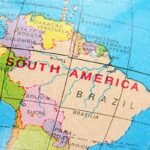
After decades of American economic dominance in the Western Hemisphere, China is now the top trading partner for four of the five largest economies outside North America. Neglect of U.S. economic partnerships in South America has turned that continent into a key source of raw materials powering China’s assembly lines while the United States struggles to secure its own supply chains. And the CCP’s Digital Silk Road has extended across the Pacific, with Huawei and other Chinese tech companies building significant market share and pushing out Western companies.
Much like the Soviet Union during the Cold War, Beijing helps keep the hemisphere’s most anti-American regimes afloat. Before Maduro’s capture, China purchased 7 percent of its oil imports from Venezuela at a sanctions-discounted price, helping keep the Maduro regime in power while fueling the Chinese economy. China has also financed more than $60 billion in projects in the country, one of Beijing’s largest loan portfolios globally. The Díaz-Canel regime touts growing Chinese investment in Cuba’s failing economy while China expands its intelligence facilities only 100 miles from Florida [emphasis added]. In Nicaragua, China is now the source of three-quarters of the country’s external borrowing, giving the Ortega-Murillo dictatorship resources with which to enrich itself and consolidate control over the country.
CCP provision of material and moral support to enemies of the United States leads to many consequences. That the Party is maintaining and expanding intelligence operations close to the United States—in Cuba—is a consequence that deserves more than one sentence. However, Pfeiffer also links to a CSIS report: “China’s Intelligence Footprint in Cuba: New Evidence and Implications for U.S. Security.”
Focus
To “end this era of [U.S.] strategic malpractice in Latin America,” the Trump administration should “follow through on the decision to focus on the region,” i.e., keep focusing on it; in addition to cajoling Venezuela, also increasing pressure “on the region’s other anti-American regimes supported by China.”
For example, Pfeiffer hopes that U.S. trade deals with Latin American countries lead to greater cooperation on export controls and other policies that make it harder for the CCP to undermine U.S. security.
He wants the U.S. to push Mexico to start screening foreign investments so that Chinese companies are prevented from using Mexico to evade U.S. tariffs.
He wants the U.S. to encourage processing of critical minerals in Latin American counties so as to “loosen China’s chokehold.” The Trump administration and some in Congress have been trying to loosen it in other ways, not always successfully. In 2025, congressional legislation to streamline the permitting process and thus speed up mining of critical minerals within the United States itself, the SPEED Act, passed in the House but hit the skids in the Senate.
Also see:
Daily Caller: “Top House Committees Sound Alarm On Suspected Chinese Spy Bases Just 90 Miles Off US Coast” (May 6, 2025)
CSIS: China’s Intelligence Footprint in Cuba: New Evidence and Implications for U.S. Security (December 6, 2024)