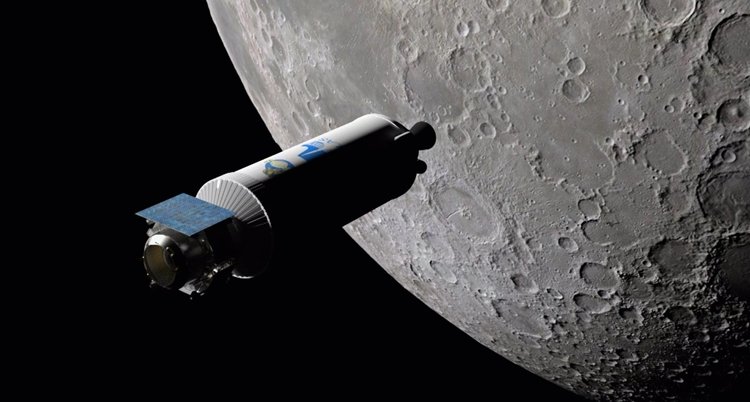
NASA’s return to the moon has become a race with Red China.
Our moon program is called Artemis, after the goddess also known as Diana. Remember her? “Great is Diana of Ephesus!” Mercury, Apollo, Artemis: NASA keeps rolling out the pagan deities.
The pagan deity whose help it needs most urgently, however, is Chronos. If this is a race to beat Beijing to the moon, the agency is running out of time. A Greek chorus has been singing its part:
NASA has a wild plan to return astronauts to the moon. Here’s why experts are starting to worry
NASA’s Moon Race Looks Like a Losing Bet
NASA in real danger of losing the moon race to China, experts tell Senate
Some biting expert comments have gotten wide publicity. Writing for SpaceNews, former NASA officials Douglas Loverro, Doug Cooke and Dan Dumbacher declare that “it is indisputably clear that the plan for Artemis will not get the United States back to the moon before China.” What’s needed is a Plan B, they say.
Complex, hard
Jim Bridenstine, NASA boss during President Trump’s first term, told the Senate in September that NASA’s plan for returning to the moon is “extraordinarily complex. This is an architecture that no NASA administrator that I’m aware of would have selected had they had the choice.” That choice was made in 2021 under the Biden administration before an administrator of NASA was even appointed. By whom? Why?
And Pablo de León, professor and chair of the department of space studies at the University of North Dakota, says that it will be “very hard to do a landing by 2027” as planned and that it would be an embarrassment if China landed first. “That means that 50-something years ago, [the U.S.] had the capability, and now we don’t have it anymore. I mean, what have we doing for half a century?”
If I recall correctly, building ties to the Muslim world was one priority.
NASA’s acting chief, Sean Duffy, the current secretary of transportation, reacted with anger to the criticism. “I’ll be damned if that is the story that we write,” Duffy said at an agency town hall meeting. “We are going to beat the Chinese to the moon. We are going to do it safely. We’re going to do it fast. We’re going to do it right.”
Here’s a red flag: an “acting administrator” operating under intense time pressure. He is overseeing an inherited, complicated, multi-step, under-researched program that was never designed to win a race, and he does not revise or streamline the effort to make it a race.
NASA’s road map for its planned moon-landing mission, called Artemis III, appears far more convoluted than the Apollo missions of the 20th century. On those lunar treks decades ago, NASA launched a single rocket—the Saturn V—that had everything the astronauts needed already on board, including the Apollo crew capsule and the landers, such as the Eagle, they rode to the moon’s surface.
NASA is not repeating that streamlined approach for several reasons. For one, spaceflight is not as simple as dragging out blueprints from old missions. The supply chains, construction methods and institutional capabilities that built the Apollo launch vehicles no longer exist.
Even if NASA could resurrect its retro rockets, the space agency has made it clear that path wouldn’t align with its goals.
As far as we know, Beijing may be planning its own “streamlined approach,” a single rocket with “everything on it that the astronauts need,” even if NASA would never stoop so low. The aim of beating Red China to the moon has to be fit into NASA’s broader and more ambitious goals. Let Beijing run its 100-yard dash. We will stick to our potato-sack race and still beat them.
Staking a claim
CTV News notes that “NASA hopes the Artemis program will accomplish far more difficult missions than Apollo, including allowing humans to visit the moon’s largely unexplored south pole region, where researchers believe water is stored.”
That south pole is certainly the communists’ objective. They have landed an unmanned craft there already and retrieved soil samples from the location.
NBC News notes that some experts are worrying that if China gets to the moon first, “it could claim valuable resources on the moon, among other risks.” Yes indeed; see CCP conduct re the Spratly Islands and the South China Sea.
Under NASA’s aggressive schedule, its Artemis II project, with humans circumnavigating the moon, occurs in April 2026. Artemis III, the human moon landing, is supposed to occur in 2027.
It doesn’t have to be this way. If the U.S. can obtain the CCP’s agreement not to claim land or resources, then there is no hurry. It won’t matter who gets their first.
If such an agreement is not possible, crank up Plan B, that “streamlined approach,” of a single rocket with “everything on it that the astronauts need.”
And step on it. □
James Roth works for a major defense contractor in Virginia.
Also see:
StoptheCCP.org: “Why Does China Want the Moon?”