Haven’t there always been PRC hardliners eager to conquer the Republic of China sooner rather than later?
The argument, though, is that the “number of Chinese pundits [who] are calling for the timetable for absorbing Taiwan to be accelerated” is increasing, in part because Trump’s tariff war is supposedly exacerbating tensions in the Taiwan Strait (Hankyoreh, June 29, 2025).
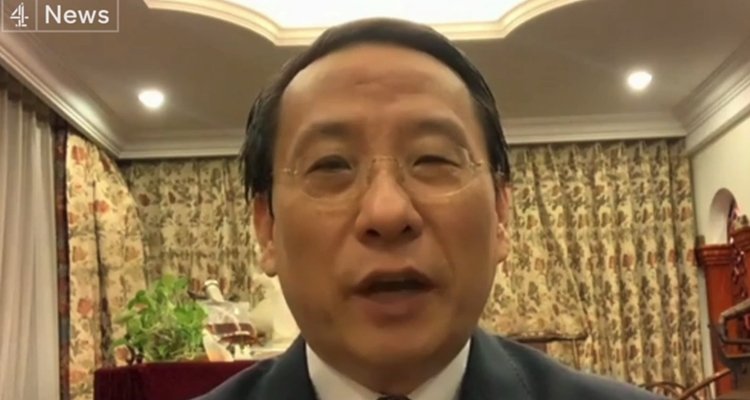
Victor Zhikai Gao
Exhibit A is an April 2 interview given by Victor Zhikai Gao, “a former diplomat who has spoken on China’s behalf in the international community.”
In the interview, he asserted that the US would never intervene militarily to protect Taiwan. He also commented that Taiwanese President Lai Ching-te had already crossed a “red line” from Beijing’s perspective and that China should take “decisive action” in the near future.
Gao further said that Lai had “fundamentally changed the status quo in cross-strait relations” with his characterization of China as a “hostile foreign force” and presenting a list of 17 hardline measures as a response strategy to Beijing. According to Gao, this showed that “the unification of the homeland cannot continue to be put off.”
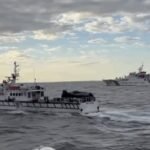
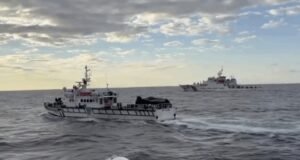
While he insisted that Beijing should not strike preemptively, he suggested an approach in which it would apply pressure by continuing to send civilian vessels and drones into Taiwan. In the event that Taiwan struck first, China would then initiate a military operation in response.
But if Gao is saying that Beijing should not strike first but instead keep up the pressure in the Taiwan Strait, how is this different from the status quo? He seems to be hoping for a precipitating incident that would give the Chinese government an excuse to attack.
What has allowed Gao to freely make such arguments is the situation presented by Trump’s policies and their disregard for friends and allies.
Gao concluded that Trump’s aim was “to squeeze money from Taiwan and make off with those riches, not to protect Taiwan.” He also predicted that the US would “not come to Taiwan’s defense if China pursues unification through military means.”
How does Gao know that the U.S. would not help the Republic of China if the People’s Republic attacks?
Gao seems to have been already pretty hardline in 2021, when he was advocating “any means possible” to “reunify” China (i.e., absorb the ROC) and complaining that a new security agreement between the U.S., the UK, and Australia was “severely damaging to regional peace.”
Hu Xijin
Another apparatchik quoted is Hu Xijin, former editor-in-chief of the commie propaganda outlet Global Times, who asserted on May 30 that “the military superiority of the mainland ‘is so clear that if a war breaks out, the majority of Taiwanese will consider it pointless to resist,’ and that it was ‘highly likely that their will to fight will rapidly collapse amid our concentrated strikes at the onset of the war. The ruling faction in Taiwan is ferociously screaming, but it’s all bark and no bite. Their will to resist is likely to collapse with a single press of a button from China.’ ”
But if Hu’s estimation that overwhelming military might will rapidly defeat no will to resist is so obviously correct, what’s been keeping the ever-barking PRC from gobbling up the ROC for all these years?
Much of the rest of the Hankyoreh article stresses the fact that China “has been amping up the intensity of its ‘gray zone strategy’—a tactic that involves low-level military provocation that is clearly threatening but not enough to expand into a full-scale war….”
“Allies”
In author Park Min-hee’s view, although Trump has called for increases in defense spending by its allies in the Pacific and urged them to more actively deter China, his administration “has not made visible efforts to earn the trust of its allies and to maintain the status quo of the international order….
“If China’s absorption of Taiwan becomes a reality and Asia falls to Chinese hegemony, then Trump will go down in history as China’s most important ally.”
By this reasoning, ROC President Lai Ching-te is also an “important ally” of his country’s arch enemy, inasmuch as he opposes the PRC too firmly and thereby provokes impatient hardliners into becoming more impatient. Too much opposition to aggressive China and too little opposition will both usher in doom, and it seems that no one on the world stage is getting it just right.