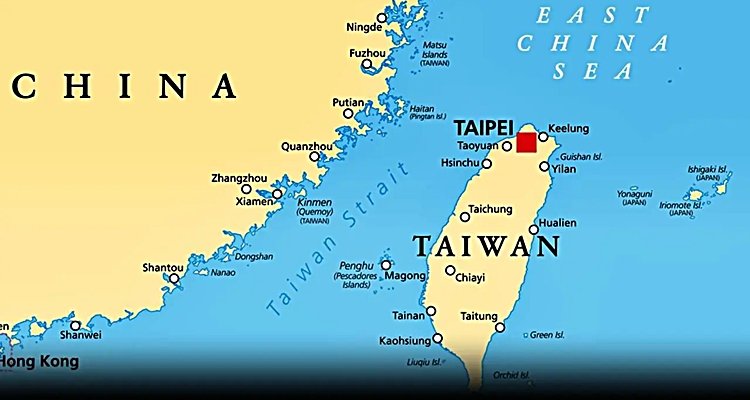
Lately, Taiwanese have been rethinking travel to China “as Beijing raises stakes for ‘separatist’ speech” (Christian Science Monitor, June 19, 2025). The threat of being murdered for saying that your country is a country is the kind of thing that would tend to provoke rethinking.
In recent years, the Chinese government has dramatically broadened its definition of what constitutes “Taiwan independence” activities. They now include any “conduct seeking to separate Taiwan from China,” and acts that deny “the reality that Taiwan is part of China,” or “suppress” support for unification. This wide net covers a vast array of political, economic, and cultural expression. Last year, Beijing also issued new punishment guidelines under China’s 2005 anti-secession law, allowing the death penalty for “Taiwan independence” activists.
These changes put younger people such as Ms. Chen—who are more likely to support Taiwan’s autonomy from Beijing—in a difficult position.
“We all feel tense…and we won’t travel on the mainland,” says Ms. Chen from Taipei. “We totally avoid changing planes in China or Hong Kong.”
The number of Taiwanese willing to risk their freedom and their lives by crossing the Taiwan Strait has dropped, remaining below the pre-pandemic level of 2019, but is still substantial: 200,000 a month. Either China’s constant threats don’t seem so scary after so many repetitions, at least in the minds of some thick-skinned citizens of the ROC; or circumstances oblige some persons to accept the risk no matter how nervous they may feel about it.
The chances that any one person, especially a non-activist, will be caught in the anti-separatist net are not (as of this moment) great. But the mainland government isn’t simply making threats. In 2024, Taiwanese political activist Yang Chih-yuan was sentenced to nine years in a PRC prison for “separatism.” And: “As of May [2025], 89 Taiwanese were missing or detained in China, according to Taiwan’s Mainland Affairs Council.”