Because the Lai administration declined to implement a revenue-sharing measure passed by the Legislative Yuan—on the grounds that doing so would undermine the national government’s ability to function, including in defense of Taiwan—Kuomintang and Taiwan People’s Party legislators say that they will begin proceedings to impeach President Lai Ching-te (Taipei Times, December 22, 2025).
The KMT and Taiwan People’s Party (TPP) caucuses on Friday last week proposed impeaching Lai. The move came after Lai [of the Democratic Progressive Party] on Monday last week refused to promulgate a legislative amendment that would have allowed local governments to receive a larger share of government revenue, arguing the legislation would hurt the nation’s fiscal sustainability. Premier Cho Jung-tai had declined to countersign the legislation, which Lai cited as the reason for not publicly announcing the law, normally considered to be routine.
The proposed impeachment is about defending democracy, according to Lo Chi-chiang, a leader of the KMT caucus.
Opposition lawmakers have also formally requested “that the Control Yuan impeach Cho” for refusing as premier to sign off on the revenue-sharing legislation. (Earlier this year, the KMT and TPP had tried to get rid of the Control Yuan, which is the branch of the ROC government with the job of “impeaching and censuring state officials and auditing government agencies.”)
Lei’s Take
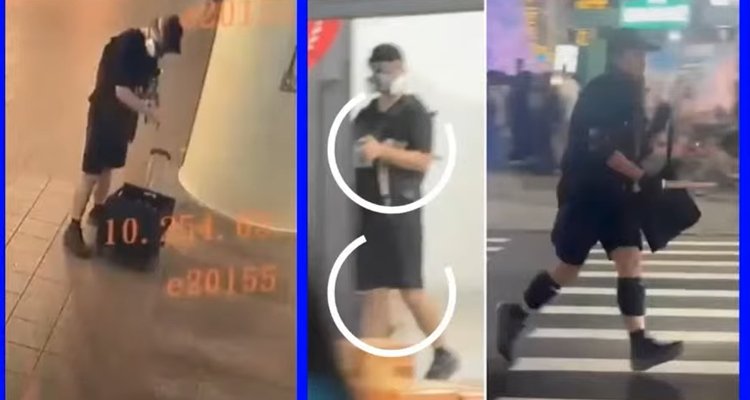
In a recent installment of Lei’s Real Talk, Lei discusses apparent political trouble for leaders of the PLA Air Force, a murderous rampage in Taipei (by one or more assailants at least one of whom is now dead), and whether these two forms of turmoil might be connected. She also talks about the impeachment effort.
On the very same day as the attack [in Taipei], Taiwan’s opposition parties, the Kuomintang [and] the Taiwan People’s Party…announced the launch of impeachment proceedings against President Lai Ching-te.
At the center of the political confrontation is a controversial amendment to Taiwan’s [Act Governing the Allocation of Government Revenues and Expenditures], the law that determines how tax revenue is divided between central and local governments. The opposition-controlled legislature—or, I should say, the pro-CCP legislature—passed changes that would significantly increase the share of revenue flowing to the local governments, which would sharply reduce the central government’s control over those funds….
The premier…cited constitutional authority to withhold countersignature, warning that the bill could undermine fiscal stability and national security, especially defense readiness and crisis response. Without the premier’s countersignature, the law cannot take effect. The opposition says the executive crossed a red line. The president’s office strongly rejects the claim….
By the way, impeaching a president in Taiwan is extraordinarily difficult. It requires the support of two thirds of all lawmakers, followed by approval from two thirds of the constitutional court justices. Actual removal from office is highly unlikely, and the two [opposition] parties do not control two thirds of the legislature.
So this is not about removing the president tomorrow. This is about a deeper struggle over power. Who controls the state’s finances? Who sets national priorities? Against that backdrop, the fact that the violent attack occurred on the same day the impeachment push began has deeply unsettled many people. Some believe that the attack may have been carried out by CCP’s fifth column hiding in the island.
[The possible] goal is to create fear, confusion, and distrust towards the Lai administration, the kind of psychological shock that weakens public confidence at a politically sensitive moment…. To be clear, these are suspicions, not conclusions. There are still a lot of questions to be answered.
Sometimes coincidence is just coincidence. But it’s also true that unless and until the PRC goes so far as to invade the ROC, the People’s Republic is determined to assault the Taiwanese and the ROC government in every way short of war that it can.