A major hurdle in the contest between nations to dominate the artificial intelligence industry is the massive amounts of energy required.
“If China were to sprint ahead of the U.S. in AI,” writes James Rogan, “then America’s security and economic primacy would be diminished. The Chinese Communist Party would become the dominant global power” (Washington Examiner, October 2, 2025).
Whether the CCP becomes “the dominant global power” depends on much more than respective AI capability, but AI has emerged as one major factor. Rogan, a commentator and former U.S. foreign service officer, says that the U.S. must increase “all forms of energy supply…. The U.S. needs more natural gas power, more green power, more coal power and it needs an immediate increase in nuclear power.”
Of course, there is no “green” power; or rather, if “green power” means naturally provided sources of power that are accessed and applied by human ingenuity, all sources of power are “green,” from sunlight to oil. But “green” is an invidious ideological tag, not an objective classification of energy sources or of the relative feasibility of exploiting different kinds of energy sources.
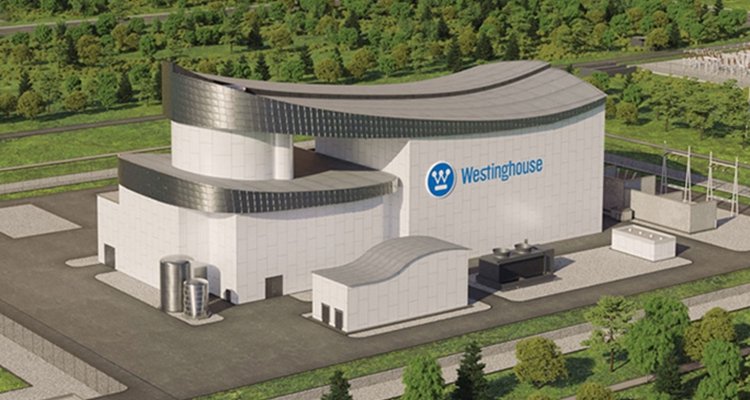
Rogan focuses on nuclear energy and in particular small nuclear power plants (SMRs), modular reactors that “can be designed, permitted, and constructed in four years, and maybe less.”
SMRs are “faster to build and to deploy” than conventional nuclear power plants but function in much the same way: nuclear fuel, fission, released heat converting water into steam, converted into electricity. Tech firms developing artificial intelligence can pay for their development and construction; firms capable of producing more SMRs are already operating in the United States; and “U.S. policy should promote the rapid build-out” of SMRs.
“Time is of the essence….”