What is the status of the U.S. trade talks with China as of this moment?
CNN: “Trump just revealed his new tariff plan. Here’s what you need to know” (July 31, 2025).
One thing I need to know is why headlines these days talk about “what you need to know.” There was no “UNITED STATES DECLARES WAR ON JAPAN AFTER DASTARDLY ATTACK; WHAT YOU NEED TO KNOW” headline on December 8, 1941.
Anyway, per CNN, what we need to know about China is that it is one of three trading partners “that didn’t see tariff rates change on Friday.” (The other two are the United Kingdom and Mexico.) “Trump signed a trade framework with the UK and China. However, the deal signed with China expires in less than two weeks, which means those tariffs could soon increase.”
We also know that the U.S. has recently dropped a prohibition on sale of certain advanced AI microchips to China. And that the Trump administration recently denied entry to Republic of China President Lai Ching-te in apparent obedience to a demand by the People’s Republic of China.
No tariff-truce extension yet
CNBC: “U.S.-China trade talks end without extension of tariff truce, as Trump weighs options” (July 29, 2025). “Chinese trade negotiator Li Chenggang earlier said that the two sides agreed to continue to push for an extension of a 90-day pause on most of the U.S. ‘reciprocal’ tariffs on Chinese goods, as well as most of Beijing’s retaliatory measures.”
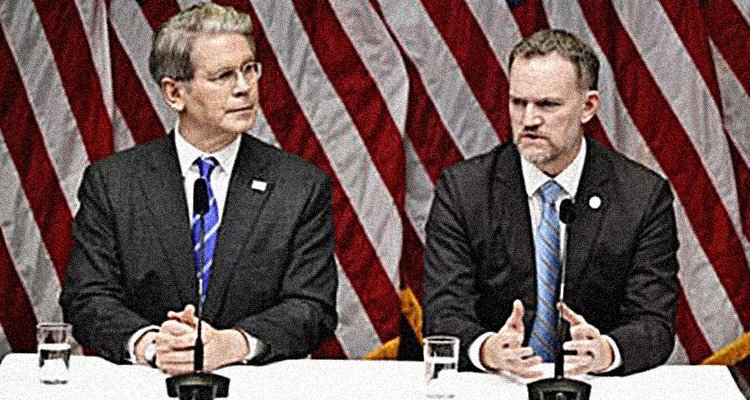
U.S. Treasury Secretary Scott Bessent (shown above, left, with U.S. Trade Representative Jamieson Greer) “said that if an extension is not reached by the deadline, then U.S. tariffs on Chinese goods will shoot back up to their April levels.”
Whether the latest framework of a trade deal will be accepted and whether, if not, the tariff truce will be extended is up to President Trump.
Trump told reporters: “We’ll either approve it or not. But he [Bessent] felt very good about the meeting, better than he felt that he felt yesterday.” It’s always a good feeling when feelings are good.
Bessent on why TikTok never came up in the negotiations: “We are very careful to keep trade and national security separate.”
The reason for this care is something we need to know. The threat posed by China is what provided much of the rationale for the steep tariff rates imposed on imports from China. It sounds like what’s been excluded from the talks is anything that might ruffle the feathers of the Chinese Communist Party.
Faith
Bessent: “I would think that it’s not the end of the world if these snapback tariffs [reversion to the super-steep tariffs on imports from China imposed in April] are on for anywhere from a few days to a few weeks, as long as the countries are moving forward and trying to negotiate in good faith.”
Another thing we need to know is why Bessent would ever think that the CCP negotiators are ever negotiating “in good faith.”
Reuters agrees that “US, China tariff truce holds for now but US says Trump has final say” (July 30, 2025). Reuters also reports that “China seeks reduction of US tariffs and tech export controls” and “China aware of strong negotiating hand, analyst says.”
Also being made known is that the agreement that was re-agreed to about China’s liberating the flow of rare earth minerals to the United States has now been even better agreed to. “Bessent said there would likely be another meeting between U.S. and Chinese officials in about 90 days, and the agreements on the flow of Chinese rare earths were becoming more refined after previous talks in Geneva and London.”
Bessent: “There was good personal interaction being built up, good, mutual respect. I think we understand their agenda much better.”
According to top CCP trade negotiator Li Chenggang: “The Chinese and U.S. economic and trade teams will maintain active communication, exchange views on economic and trade issues in a timely manner, and continue to promote the stable and healthy development of bilateral economic and trade relations.”
According to the CCP news agency Xinhua’s readout of the trade talks: “Stable, healthy and sustainable economic and trade relations between China and the United States are not only conducive to achieving their respective development goals, but also conducive to promoting the development and stability of the world economy.”
All is for the best in this best of all possible worlds.